
Decoding Adaptive Cruise Control: The Embedded Sensors and Code Shaping Modern Driving

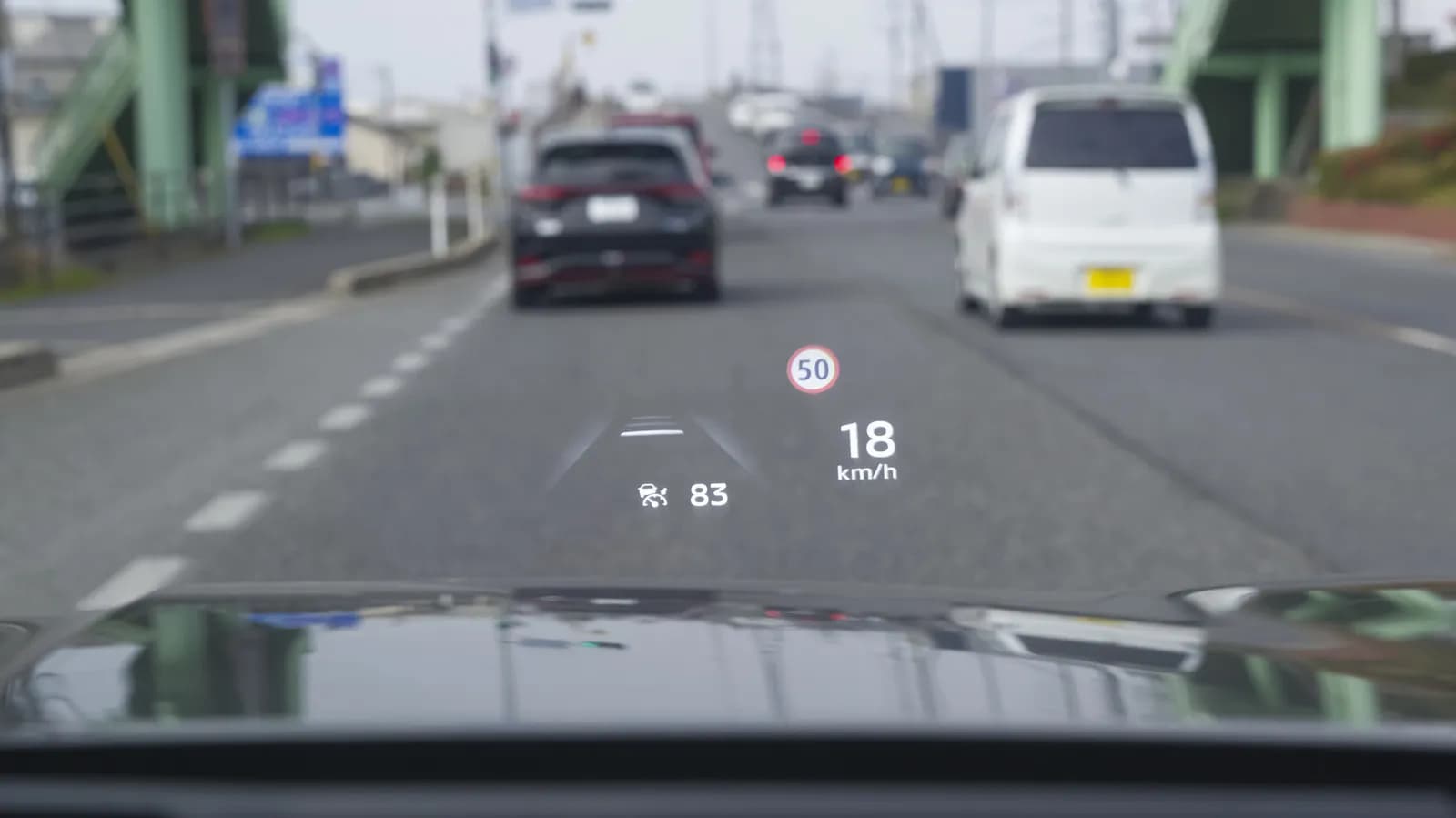
For decades, traditional cruise control was little more than a rudimentary electromechanical throttle lock designed to hold a steady vehicle speed on long highway stretches. Today, that simple mechanism has evolved into adaptive cruise control (ACC), one of the most widely deployed forms of advanced driver-assistance systems (ADAS) on the road. Far from being a futuristic moonshot, ACC operates through a carefully balanced combination of commodity radar units, optical cameras, and deterministic embedded software. Yet beneath its relatively modest hardware footprint lies an architectural feat that fundamentally alters how motorists interact with the road and how traffic dynamics function at scale.
The Core Architecture: Radar, Optics, and Sensor Fusion
At the center of any modern adaptive cruise control system is an array of forward-facing environmental sensors. Most production vehicles rely on a cooperative architecture combining millimeter-wave radar mounted in the front grille or bumper and a monocular or stereoscopic camera placed behind the upper windshield. Radar offers exceptional ranging precision, measuring the distance and relative velocity of objects ahead by tracking the Doppler shift of reflected radio waves. Crucially, radar performs reliably across poor weather conditions, cutting through heavy fog, driving rain, and nighttime darkness where visible-spectrum optics struggle.
Conversely, optical cameras contribute rich semantic context that radar alone cannot provide. Cameras excel at identifying lane boundaries, classifying target objects as passenger cars, motorcycles, or commercial trucks, and spotting roadside hazards. Modern ADAS processors fuse these two data pipelines together using sensor fusion algorithms, such as extended Kalman filters. By synthesizing the electromagnetic range data of radar with the spatial classification of computer vision, the system constructs a persistent, high-confidence world model of the vehicle's immediate trajectory, minimizing false positives while guaranteeing millisecond-level responsiveness.
From Perception to Actuation: The Real-Time Control Loop
Once perception layers detect a lead vehicle, the task transitions to control theory. Adaptive cruise control is governed by real-time closed-loop feedback systems running on high-integrity automotive microcontrollers. Operating within strict safety-critical constraints often governed by standards like ISO 26262, the electronic control unit (ECU) calculates the gap between the vehicle and the leading target thousands of times per minute. The system continuously evaluates time-to-collision metrics, balancing target following distance against user-defined cruising speeds.
Achieving smooth acceleration and deceleration demands sophisticated proportional-integral-derivative (PID) controllers and model predictive control (MPC) frameworks. The software cannot simply apply raw brake pressure or throttle input; it must modulate powertrain torque and electro-hydraulic braking systems to mimic natural, comfortable driving maneuvers. Jerk—the rate of change of acceleration—must be tightly constrained to keep passengers comfortable while ensuring the vehicle can arrest momentum rapidly if traffic suddenly slows or comes to a complete halt.
The Behavioral Shift: How Algorithmic Driving Reshapes Human Habits
While the engineering behind ACC is compelling, its secondary effects on human psychology and driving habits are equally profound. Studies and field observations indicate that drivers who regularly engage ACC undergo a marked shift in their behind-the-wheel behavior. By offloading the constant micromanagement of maintaining safe following distances, drivers experience reduced cognitive fatigue during monotonous commutes. Long-distance road travel becomes perceptibly less taxing as automated throttle and braking management smooth out the journey.
However, this reliance also introduces subtle behavioral trade-offs. When drivers hand over longitudinal vehicle control to an algorithm, their lane-changing aggression and impulse to weave through dense traffic frequently decline. Many motorists settle into predictable following intervals set by the system's presets. At the same time, this delegation introduces the hazard of automation complacency: drivers may assume the radar-camera suite has a higher operational envelope than it actually does, leading to slower human intervention when confronted with edge cases like stationary obstacles, cut-in vehicles, or erratic roadway debris.
Macro-Level Traffic Dynamics and the 'Accordion Effect'
Beyond individual cabins, adaptive cruise control exerts a measurable ripple effect across metropolitan highway systems. One of the primary catalysts for phantom traffic jams—sudden congestive waves that occur without an obvious accident or bottleneck—is the human tendency toward overreaction. A single driver tapping their brakes causes trailing drivers to brake slightly harder, creating an amplified deceleration wave known in transportation engineering as the shockwave or 'accordion effect.'
Because ACC algorithms react purely to distance and velocity differentials without emotional volatility or exaggerated braking reflexes, vehicles equipped with these systems act as natural shock absorbers in the traffic stream. Even modest fleet penetration rates of vehicles running smooth, deterministic cruise algorithms have been demonstrated in simulation models to dampen shockwaves, normalize traffic flow rates, and reduce localized emissions caused by constant stop-and-go acceleration cycles.
Engineering Challenges and Edge Cases in Production
Despite years of refinement, deploying consumer-grade ACC remains a discipline packed with technical edge cases. Embedded automotive software developers must anticipate non-ideal road environments where basic sensor assumptions degrade. Heavy spray from commercial vehicles can scatter radar signals, direct sun glare can blind forward-facing CMOS image sensors, and steep vertical elevation changes can briefly pitch sensors away from tracked vehicles ahead.
Another persistent engineering hurdle is managing highway curvature and adjacent-lane tracking. When negotiating tight turns, radar beams often illuminate vehicles in neighboring lanes, risking 'phantom braking' events where the ECU mistakenly perceives an adjacent car as an obstruction directly in the vehicle's travel vector. Developers continuously refine spatial filtering and lane-association logic to keep the system locked solely onto targets occupying the host vehicle's predicted curvature path.
The Stepping Stone Toward Full Autonomy
Adaptive cruise control is far more than a luxury convenience package; it serves as the foundational scaffolding upon which higher-level autonomous systems are built. The integration of longitudinal speed regulation with lateral lane-centering assistance forms Level 2 automated driving, laying the structural groundwork for drive-by-wire architectures, centralized domain controllers, and high-bandwidth automotive Ethernet buses.
As automakers push toward higher degrees of autonomy, the lessons learned from managing driver trust, sensor redundancy, and graceful degradation during ACC failure modes directly inform future software stacks. By bridging the gap between mechanical velocity control and intelligent environment perception, adaptive cruise control has quietly proven that safety-critical automation can integrate seamlessly into consumer transportation, redefining our relationship with the machines that carry us.
Source: engadget.com