
Decoding NVIDIA's $16,000 Ultra-GPU: Why Enterprise Hardware Is Not for Gamers

Introduction to Enterprise Silicon
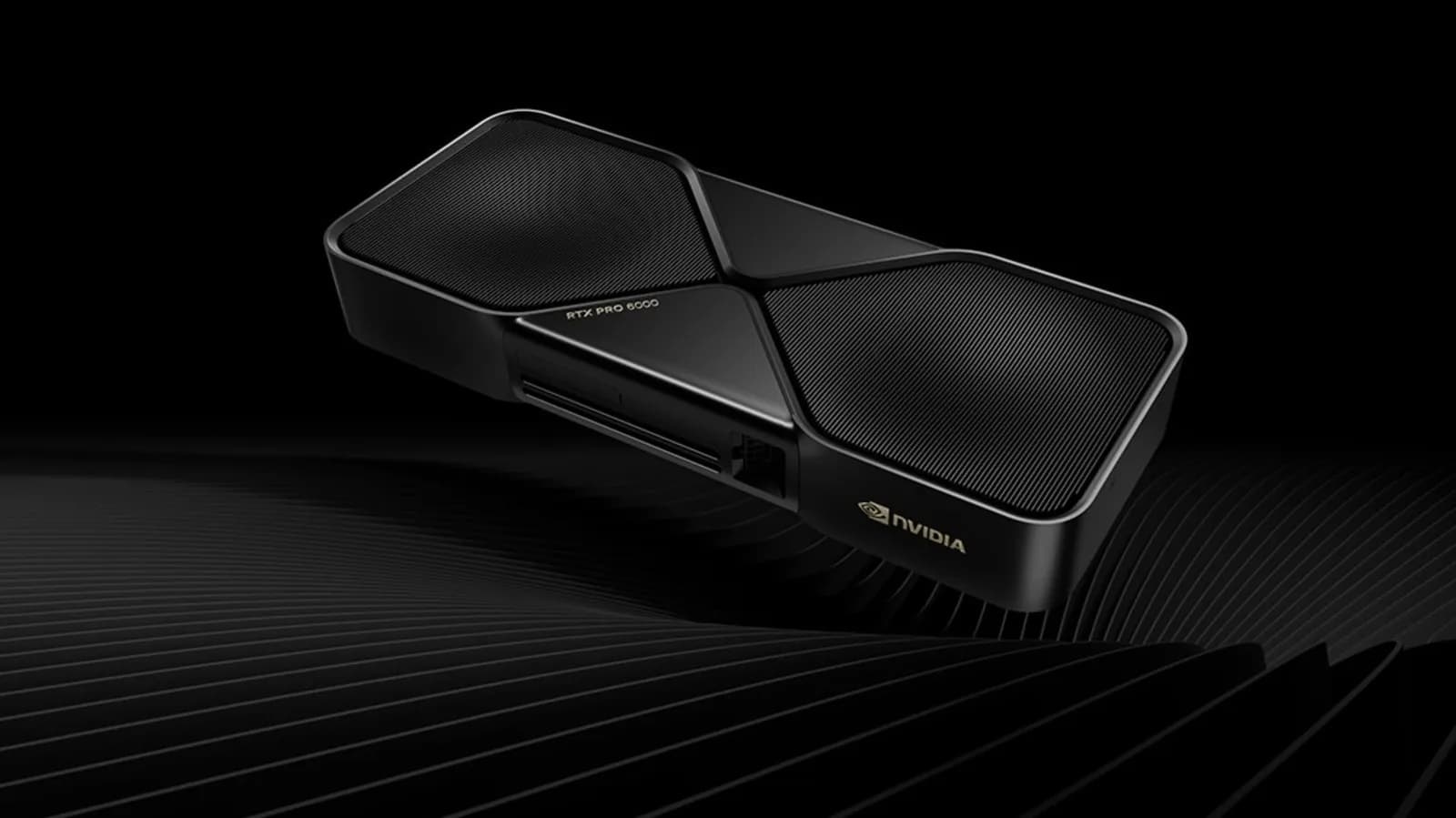
In the hardware enthusiast community, NVIDIA's consumer-facing flagship cards traditionally dominate the spotlight. However, sitting far above the consumer tier in price, architecture, and purpose are professional-grade workstation GPUs. With price tags reaching $16,000 and beyond for elite models like the RTX PRO 6000, these enterprise accelerators easily outperform standard gaming flagships in specific metrics. Yet, despite their raw compute muscle, they are almost never found inside high-end gaming rigs. Understanding why requires looking past raw frame rates and examining the distinct worlds of consumer entertainment and professional engineering workflows.
The divide between consumer and enterprise silicon is not merely a matter of marketing or artificially inflated price tags. It reflects fundamentally different engineering priorities, reliability requirements, and economic models. While a gamer might push a GPU to its absolute thermal limit for a few hours of virtual reality or ray tracing, an enterprise data center or research lab relies on these processors to crunch petabytes of data continuously for months without a single bit-flip. This article explores the structural realities that keep these elite workstation cards firmly in the hands of professionals rather than PC enthusiasts.
The Anatomy of a Workstation Powerhouse
At first glance, a high-end professional GPU and a top-tier consumer card might share a similar architectural lineage, often descending from the same foundational silicon die. However, the similarities largely end at the transistor level. Enterprise GPUs are engineered with massive pools of VRAM—often double or quadruple the capacity of their gaming counterparts—coupled with error-correcting code (ECC) memory. ECC is non-negotiable in scientific computing, financial modeling, and machine learning, as a single stray cosmic ray or voltage fluctuation can corrupt a multi-day model training run or a complex simulation.
Beyond memory integrity, workstation GPUs are optimized for double-precision floating-point performance (FP64) and parallelized multi-tasking, whereas consumer cards focus heavily on single-precision (FP32) and integer throughput tailored for real-time rasterization and ray-traced graphics. The driver stack also diverges significantly. Enterprise drivers are certified for mission-critical software suites—ranging from computer-aided engineering (CAE) packages to digital content creation tools like Maya and Houdini. These drivers prioritize deterministic stability and viewport precision over raw frame-rate acceleration.
The Economics of the $16,000 Price Tag
To the average consumer, spending the price of a used automobile on a single graphics card sounds absurd. However, in the context of enterprise software development, visual effects studios, and corporate research departments, a $16,000 piece of hardware is a modest capital expenditure if it accelerates a workflow. Time is capital in enterprise environments; if a rendering farm or a deep learning pipeline can complete tasks twice as fast, the hardware pays for itself within weeks through labor savings and faster time-to-market.
Furthermore, the enterprise price tag includes intangible costs that consumer hardware manufacturers do not support. This pricing encompasses long-term hardware support cycles, guaranteed component availability, extensive ISV (Independent Software Vendor) certifications, and enterprise-grade customer service. When a financial institution or an automotive manufacturer deploys hundreds of workstations, they require the assurance that the hardware vendor will stand behind the product with rapid replacement warranties and deep technical debugging support.
Why Gamers Don't Need Enterprise Silicon
Gamers looking at the spec sheet of an RTX PRO 6000 might assume that more VRAM and higher core counts automatically translate to better gaming performance. In reality, modern video games are rarely constrained by the architectural bottlenecks that plague professional workloads. Consumer game engines are optimized specifically for consumer APIs like DirectX and Vulkan, targeting the hardware profiles of mainstream and enthusiast PCs. Running a game on a workstation GPU often yields negligible performance gains—and sometimes even lower frame rates—due to clock speed tuning and driver overhead geared toward professional stability rather than raw game rendering.
Moreover, consumer GPUs offer a far superior price-to-performance ratio for entertainment use cases. Spending thousands of dollars extra for ECC memory or enterprise drivers yields zero tangible benefit when playing the latest open-world RPG. The software ecosystem for gaming simply does not leverage the advanced parallel compute features, massive memory pools, or specialized instructions embedded within workstation silicon, making such an investment entirely irrational for a purely entertainment-driven setup.
The Developer and Researcher Perspective
For software engineers, data scientists, and technical artists, hardware selection is a critical architectural decision. Developers building machine learning models, running local Large Language Models (LLMs), or compiling massive codebases require hardware that can handle expansive memory footprints. The sheer volume of VRAM on enterprise cards is often the deciding factor, allowing researchers to load larger batch sizes and more complex neural network architectures into memory without triggering out-of-memory errors.
Yet, even for developers, the steep cost of elite workstation cards forces a strategic balancing act. Many teams opt for hybrid approaches, utilizing cloud-based instances for heavy model training while relying on more affordable consumer or prosumer cards for local development and testing. Understanding the precise computational bottlenecks of a specific software stack ensures that engineering budgets are allocated toward hardware features—such as memory bandwidth and capacity—that directly impact compilation and inference times.
Risks, Trade-offs, and Market Realities
The strict segmentation between consumer and enterprise hardware creates interesting market dynamics and occasional friction points. As consumer GPUs continue to grow in physical size and power consumption, the lines have occasionally blurred, leading tech enthusiasts to repurpose consumer cards for light machine learning tasks. However, artificial product differentiation—such as driver-level restrictions or missing hardware features like full-speed FP64 compute on consumer dies—ensures that enterprise buyers cannot simply substitute cheap gaming cards for data center infrastructure.
This segmentation also introduces supply chain vulnerabilities. High-demand cycles in artificial intelligence and enterprise computing can strain the availability of advanced silicon wafers, driving up costs and limiting supply across the entire semiconductor ecosystem. For hardware manufacturers, prioritizing high-margin enterprise products makes sound business sense, but it leaves consumer advocates watching as the price ceiling for top-tier computing hardware climbs ever higher.
Conclusion and Future Outlook
The existence of $16,000 workstation GPUs underscores the reality that modern computing is heavily specialized. While consumer electronics dominate cultural conversations, the backbone of technological innovation is forged on enterprise infrastructure designed for reliability, massive scale, and precision. As artificial intelligence, real-time simulation, and complex data visualization continue to converge, the boundary between consumer and professional hardware will remain distinct. For developers and engineers, mastering the nuances of these hardware tiers ensures that every computational dollar is spent wisely, bridging the gap between raw silicon and real-world productivity.
Source: engadget.com