
Decoupling Wearable Tech: HTC Introduces Privacy-Centric Smart Glasses

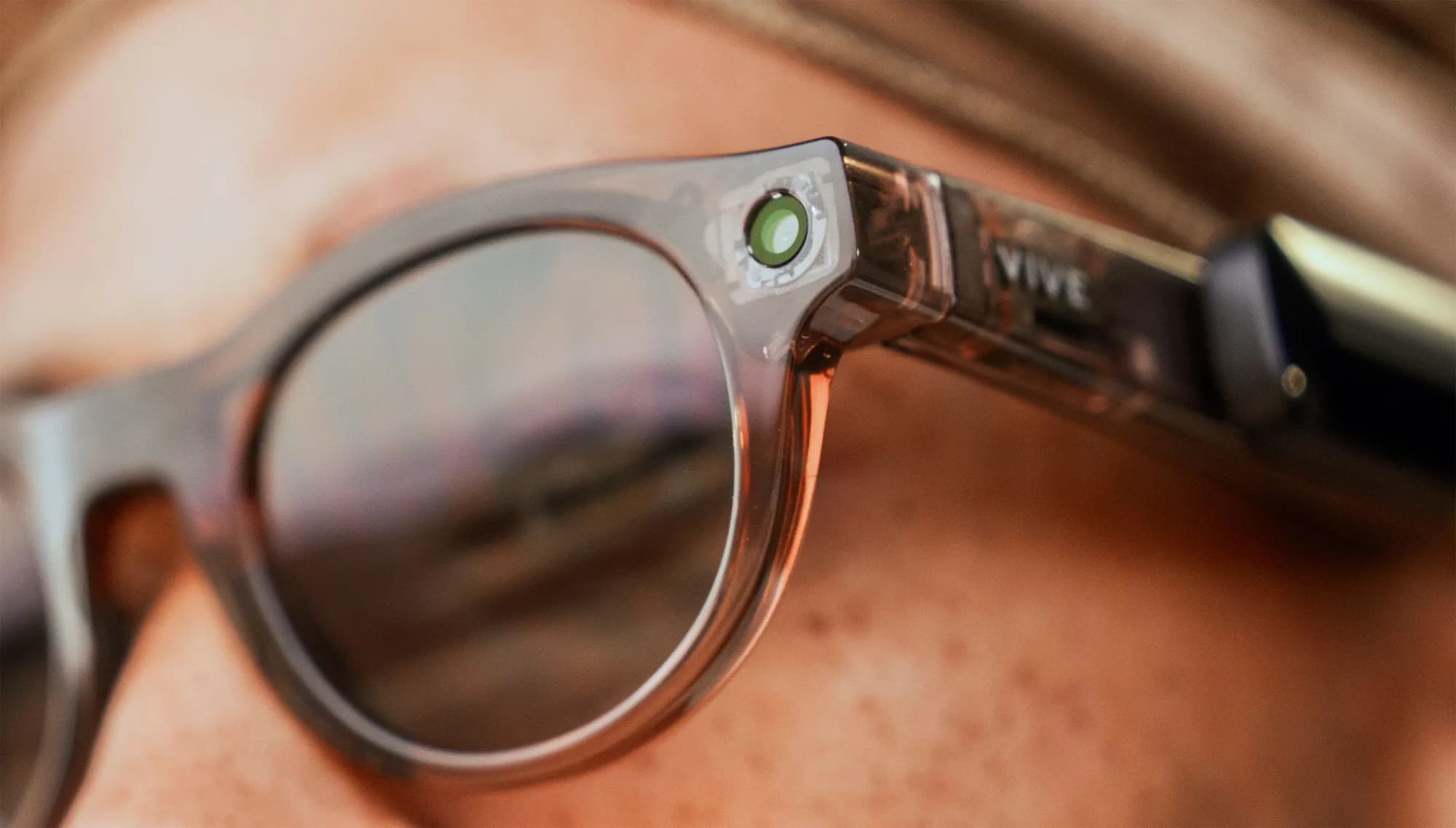
Smart glasses have steadily evolved from niche novelties into compelling consumer electronics, driven largely by advancements in miniaturized sensors, improved battery chemistry, and multimodal artificial intelligence. Yet, as the category gains mainstream traction, it has inherited the baggage of modern platform capitalism: pervasive surveillance, tight integration with ad-driven social networks, and ambiguity surrounding how sensor feeds are handled. HTC's latest foray into wearable computing seeks to challenge this paradigm, offering a hardware suite that directly competes with market leaders like Meta's smart glasses while strictly eschewing mandatory social media linkages in favor of user privacy.
The Shifting Landscape of Connected Eyewear
For several years, the narrative around smart glasses was dominated by enterprise headsets and clunky developer kits. That dynamic changed significantly when consumer-oriented, audio-and-camera frames entered the market. By disguising microphones, miniature camera sensors, and open-ear speakers within everyday eyewear silhouettes, hardware manufacturers proved that ambient computing could achieve broad consumer appeal without relying on bulky display engines.
However, this transition came at an architectural cost. The dominant players in the space operate primarily as advertising and social media giants. In those ecosystems, smart frames do not merely function as peripheral input-output devices; they serve as sensory extensions for expansive data-collection pipelines. Every photo snapped, video streamed, voice command processed, and ambient conversation recorded often passes through proprietary cloud backends designed to refine machine learning models and bolster user profiling. HTC is positioning its new hardware as an antidote to this locked-in, privacy-compromising environment.
Hardware Parity Without the Walled Garden
HTC’s engineering philosophy with these smart glasses focuses on delivering feature parity with existing consumer hardware while radically overhauling the underlying data agreement. The hardware incorporates high-fidelity audio transducers, spatial microphones, and high-resolution optical sensors capable of everyday photography, video recording, and multimodal interactions. On the surface, the capabilities mirror what consumers have come to expect from leading alternatives: hands-free media capture, ambient voice assistance, and seamless smartphone companion synchronization.
The defining divergence lies in the device’s software stack and network routing. Rather than funneling all incoming media and telemetric data directly through a proprietary social media network, HTC’s architecture treats the hardware as a generalized wearable computing node. Users are not compelled to authenticate with a central social graph, nor is the system software architected to nudge users into sharing their daily perspectives onto public timelines. Instead, captured media remains locally managed on the device or its paired host, returning autonomy back to the device owner.
Why Privacy-by-Design Matters in Ambient Computing
Ambient computing introduces unique security and ethical challenges that smartphones never fully encountered. Because glasses sit on the bridge of a user's nose, they naturally record what the wearer sees and hears from a first-person perspective. When such devices are hardwired to corporate networks whose primary monetization engine is user behavioral data, the risk of ambient surveillance expands exponentially. Even innocent interactions in domestic or workplace settings run the risk of telemetry leakage.
By prioritizing a privacy-first approach, HTC is tapping into a growing segment of tech-savvy users and developers who are increasingly weary of ubiquitous corporate trackers. A standalone wearable framework that respects local boundaries allows users to capture visual records and interact with smart assistants without the implicit trade-off of corporate data harvesting. This architectural choice demonstrates that modern consumer gadgets can deliver cutting-edge conveniences without treating user data as an unmonetized byproduct.
Developer Implications: Towards Open APIs and Edge Processing
From a software development standpoint, smart glasses decoupled from a single social platform unlock intriguing possibilities. Proprietary ecosystems typically maintain tight, gatekept software development kits (SDKs) that restrict how third-party applications interact with the camera and microphone pipelines. Developers building for those platforms must adhere to rigid policy frameworks designed to protect the parent company's ecosystem rather than promote open-ended experimentation.
HTC's approach could signal broader support for modular, local-first development. When wearable sensors output data to a local client rather than an opaque cloud silo, developers can experiment with custom on-device machine learning models, private edge inference, and decentralized storage protocols. For engineers working on assistive technologies, context-aware productivity tools, or real-time transcription, having access to raw sensor streams without arbitrary platform restrictions is a major advantage.
Market Headwinds and Competitive Challenges
Despite the evident ideological and technical benefits of a privacy-centric device, HTC faces notable headwinds in competing against entrenched tech titans. Companies like Meta have subsidized the cost of their smart glasses through massive scale, vast marketing budgets, and vertical integration with their existing AI research labs. Delivering high-quality hardware at a competitive price point without relying on secondary monetization streams is notoriously difficult in the consumer electronics sector.
Furthermore, consumer convenience often trumps privacy in broad market adoption. Mainstream users frequently gravitate toward frictionless social sharing, built-in cloud backups, and seamless integration with the messaging platforms their friends already inhabit. HTC must convince consumers and enterprise clients alike that data dignity and hardware independence provide sufficient everyday utility to justify choosing an alternative ecosystem.
Looking Ahead: The Future of Sovereign Wearables
HTC's move marks a critical evolutionary step in the maturation of wearable computing. As wearable form factors continue to integrate heads-up displays, eye tracking, and continuous multimodal reasoning, the question of who controls the sensory stream will become paramount. Relying entirely on advertising-driven conglomerates to shepherd the transition toward pervasive computing poses clear risks to digital self-determination.
Ultimately, the emergence of decoupled, privacy-oriented smart glasses proves that the industry does not have to settle for a single, surveillance-heavy template. By proving that robust hardware can exist outside of walled social networks, HTC offers an alternative path forward—one where smart eyewear serves purely as a tool for the individual rather than a lens for corporate scrutiny.
Source: wired.com