
Engineering the Impossible: How Tesla's Next Roadster Aims to Defy Physics with Cold Gas Thrusters

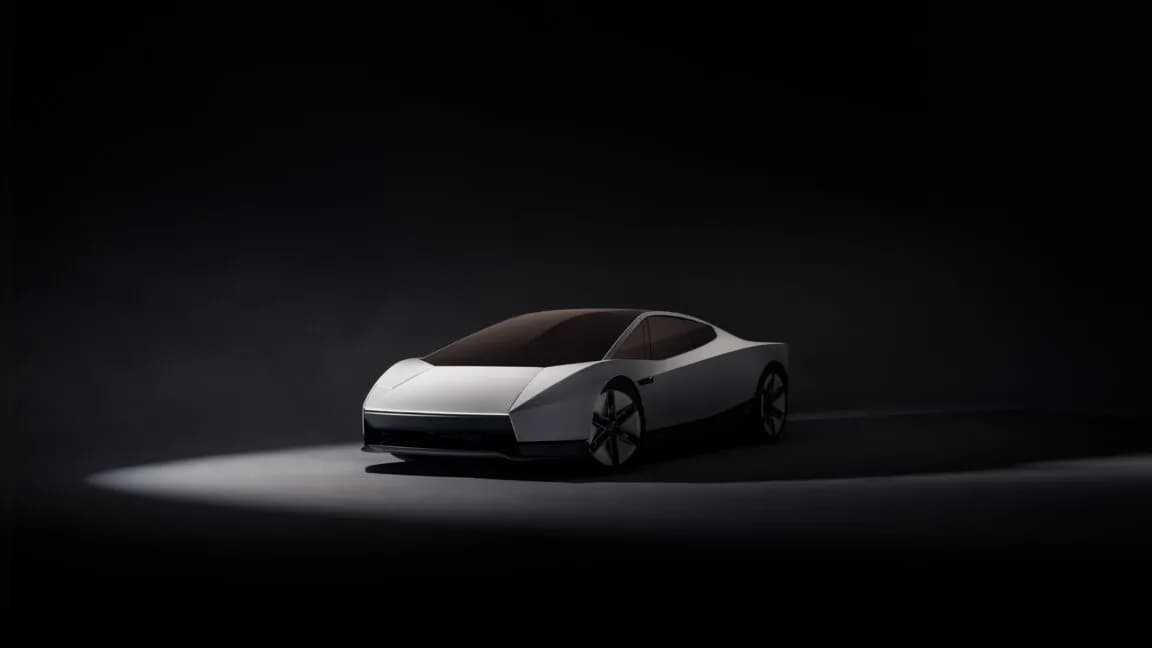
Re-Engineering the Supercar Narrative
For years, the electric vehicle revolution has been defined by rapid torque delivery, silent acceleration, and heavy battery packs. While these traits have successfully disrupted the traditional automotive market, hypercar enthusiasts have frequently questioned whether battery-electric vehicles could ever truly match the visceral drama and extreme engineering feats of exotic fuel-burning machines. Tesla's enduring promise of a second-generation Roadster has always sat at the edge of this debate, initially pitched with performance figures that sounded almost entirely detached from conventional automotive reality.
Now, emerging details surrounding the development of this elusive vehicle suggest that Elon Musk and his engineering teams are looking far beyond standard automotive design paradigms. Instead of relying solely on traditional tire traction and aerodynamic downforce, Tesla is reportedly adapting cold gas thruster technology—a system historically utilized in aerospace maneuvering and cinematic Hollywood stunts—to give the vehicle its edge. This bold design choice blurs the absolute line between passenger cars and rocketry, setting a brand-new precedent for how ultra-high-performance vehicles might interact with the physical world in the future.
The Mechanics of Cold Gas Propulsion
At its core, cold gas propulsion is a remarkably straightforward yet violently effective concept. Unlike chemical rockets that rely on high-temperature combustion, a cold gas thruster stores inert gas—often nitrogen or compressed air—under extreme pressure within a specialized vessel. When a valve opens, the gas expands rapidly through a converging-diverging nozzle, generating substantial thrust instantly. In aerospace applications, these systems are used for attitude control in the vacuum of space, where aerodynamic control surfaces are completely useless.
Bringing this technology down to the asphalt requires solving a massive set of engineering and packaging challenges. A car operates in a dense atmosphere and is constantly subjected to gravity, friction, and thermal dynamics. Integrating high-pressure tanks, delivery manifolds, and directional nozzles safely inside a sleek carbon-fiber chassis means rethinking safety cells, weight distribution, and auxiliary power management. It shifts the primary skill set required for automotive engineering from traditional mechanical drivetrain design toward fluid dynamics, pressure containment, and aerospace-grade control systems.
Drawing Inspiration from Cinematic Stunts
The concept of using compressed gas to violently alter a vehicle's orientation is not entirely new; in fact, it has a rich history within the Hollywood stunt community. For decades, special effects coordinators have installed compressed gas rams and specialized rocket-assist systems underneath cinematic stunt cars to force dramatic mid-air rolls, sudden spins, or impossible-looking directional changes on command. These systems were built to deliver explosive, short-duration force exactly when scripted.
Tesla’s implementation, however, intends to move this cinematic trickery into the realm of precise, computer-controlled vehicle dynamics. Rather than a simple on-off switch meant for a single dramatic leap, the Roadster's proposed thruster array is envisioned as an active stability management tool. Controlled by automated flight-like software, these bursts of compressed air could theoretically counteract body roll, assist in ultra-sharp cornering maneuvers, and dramatically shorten braking distances by pushing the vehicle downward onto the pavement with sheer mechanical force.
Why It Matters for the Future of Engineering
While a car equipped with rocket thrusters sounds like a novelty designed primarily for headlines, the underlying engineering implications reach much further. As consumer automotive technology plateaus in terms of what traditional tire-and-asphalt physics can safely deliver, engineers are actively searching for paradigm shifts. The crossover between automotive design and aerospace engineering is growing increasingly porous, especially as companies experiment with autonomous flight, advanced materials, and complex electronic control loops.
For software and hardware engineers alike, this approach introduces an entirely new tier of complexity. Controlling a vehicle requires not just managing wheel speed and steering angles, but also calculating multidimensional vectors of thrust in real-time. The software stack must coordinate mechanical braking, regenerative braking, aerodynamic active elements, and pneumatic thrusters simultaneously. This represents a monumental leap in vehicle automation and cyber-physical systems integration, pushing software developers to write fault-tolerant control algorithms that operate under extreme physical stress.
Industry and Developer Implications
For the broader technology and automotive sectors, Tesla's gamble serves as a fascinating stress test for consumer appetite and regulatory acceptance. Supercar manufacturers have traditionally focused on mechanical purity, lightweight alloys, and high-revving internal combustion engines. By introducing compressed gas thrusters, Tesla is leaning heavily into a software-first, physics-bending philosophy that treats the vehicle more like a drone or a reusable rocket stage than a traditional car.
This shift opens up intriguing conversations for developers working at the intersection of embedded systems, simulation software, and hardware-in-the-loop (HIL) testing. Simulating the behavior of a high-performance vehicle that can suddenly redirect its momentum via pneumatic force requires sophisticated physics engines and massive computational models. Developers must account for variable pressure drops, fluid dynamics, thermal cooling of valves, and millisecond-level actuator response times to ensure the system behaves predictably and safely under high-velocity conditions.
Unresolved Risks and Practical Challenges
Despite the undeniable cool factor of a rocket-assisted supercar, the engineering hurdles are immense and fraught with safety considerations. High-pressure gas storage inherently carries risks, particularly in the event of a high-speed collision or severe structural compromise. Ensuring that onboard pressure vessels can withstand catastrophic crashes without turning the vehicle into a fragmentation hazard requires extensive materials science breakthroughs and rigorous regulatory scrutiny.
Furthermore, practical questions regarding everyday usability remain largely unanswered. How frequently must the pressure tanks be refilled? Does the system require specialized servicing infrastructure that everyday consumers cannot access? Will insurance companies be willing to underwrite a street-legal vehicle that incorporates aerospace thrusters capable of altering its trajectory mid-drive? These open questions highlight the tension between visionary engineering prototypes and the mundane realities of mass-market commercialization.
The Road Ahead
Whether the next-generation Tesla Roadster ultimately launches with operational cold gas thrusters or scales back the concept to a more conventional aerodynamic package, the initiative itself highlights an industry searching for radical new frontiers. It challenges our fundamental assumptions about what a ground vehicle should look like, how it should move, and where the boundaries between automotive and aerospace engineering truly lie. For developers and engineers watching from the sidelines, it serves as a powerful reminder that pushing the envelope often requires looking backward at fifty-year-old aerospace concepts and reimagining them through the lens of modern software and advanced materials.
Source: arstechnica.com