
Epic Games Shifts Toward an AI-First Production Model for Upcoming Major Titles

The Paradigm Shift in Game Development
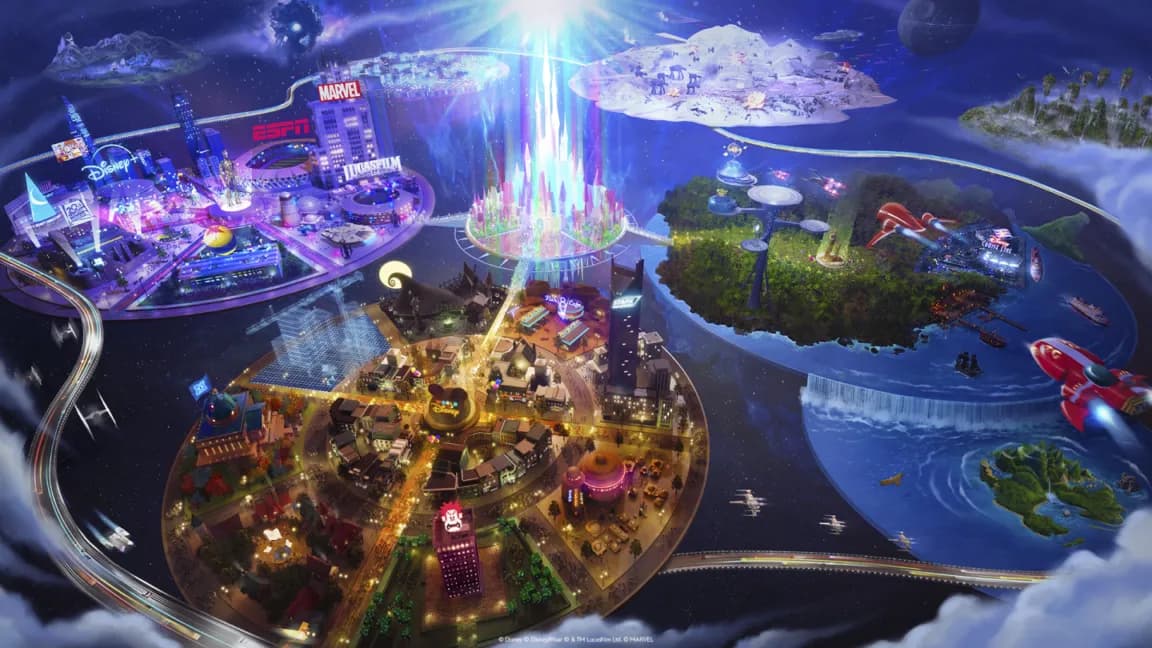
The video game industry has long relied on massive, highly specialized human teams to craft complex virtual worlds, write sprawling codebases, and render intricate art assets. However, economic pressures, ballooning development timelines, and the relentless march of generative artificial intelligence are forcing a fundamental reassessment of these pipelines. Recent reports indicate that industry titan Epic Games is undergoing a radical transition, adopting an "AI-first" development model for its highly anticipated, yet delayed, blockbuster shooter titles tied to major intellectual properties like Marvel and Star Wars.
This pivot signals more than just a minor workflow adjustment; it represents a philosophical change in how AAA games are conceptualized and built. By integrating machine learning models directly into the foundational stages of production, studios hope to drastically reduce the friction that currently plagues modern software engineering in the entertainment sector. As development cycles extend past half a decade and budgets eclipse hundreds of millions of dollars, leadership teams are looking to automated tooling as an inevitable survival mechanism.
Decoding the "No More Hand-Written Code" Mandate
Among the most striking aspects of this reported pivot is the minimization of traditional, manual programming. While software engineers will still be required to architect systems, review outputs, and handle complex integration tasks, the bulk of boilerplate scripting, logic generation, and optimization routines are increasingly being offloaded to specialized code-generation models. This mirrors trends seen in enterprise software development, where developers act more as reviewers and orchestrators rather than typing out every line from scratch.
In the context of game engines like Unreal Engine, this shift could radically alter how gameplay mechanics, physics interactions, and UI logic are implemented. Instead of engineers spending weeks debugging legacy scripts or building tedious utility functions, AI models trained on vast repositories of game logic can generate functional prototypes in seconds. This allows technical teams to focus their cognitive bandwidth on high-level architecture and resolving edge-case architectural bottlenecks rather than getting bogged down in repetitive implementation details.
Revolutionizing Asset Pipelines and Art Direction
Beyond the codebase, the creation of digital art, textures, and 3D assets has historically been one of the most expensive and time-consuming bottlenecks in AAA game development. Traditional pipelines require concept artists, modelers, riggers, and animators to spend countless hours bringing a single character or environment piece to life. Under an AI-first model, the generation of initial concept art, texturing passes, and background environmental props is heavily accelerated through generative vision models.
This does not eliminate human artists, but it fundamentally redefines their roles. Artists transition from manual producers of assets to master curators and directors, guiding generative models with precise prompts, style references, and structural constraints. For ambitious projects featuring vast universes like Star Wars and Marvel, this capability means worlds can be populated with unprecedented density and variety without requiring exponential scaling of human labor force sizes.
The Developer Experience and Shifting Skill Sets
For software engineers and technical artists working within the gaming ecosystem, this transformation brings a mixture of opportunity and anxiety. The skill set required to thrive in an AI-first studio is rapidly evolving. Memorizing API syntax or spending hours optimizing mundane loops is becoming less valuable than understanding prompt engineering, model fine-tuning, system integration, and rigorous output validation.
Engineers must now become proficient in managing AI agents that write and test code concurrently. This introduces a new class of engineering challenges: technical debt generated by machines, security vulnerabilities introduced by non-deterministic codebases, and the difficulty of maintaining cohesive architecture across systems built by disparate automated pipelines. Developers must adapt to a workflow where their primary deliverable is no longer code, but the systems that generate and verify that code.
Navigating Industry Backlash and Quality Control
Implementing generative AI at a massive corporate scale is rarely frictionless, particularly in an industry deeply passionate about human craftsmanship. Audiences and creators alike have raised valid concerns regarding the homogenization of artistic style, potential copyright complications, and the erosion of human labor in favor of automated systems. Studios attempting this transition must walk a fine line between maximizing operational efficiency and preserving the unique artistic soul that fans expect from tier-one franchises.
Furthermore, quality control remains a monumental hurdle. Generative models are notoriously prone to hallucinations, logical inconsistencies, and subtle bugs that can be difficult to trace in a complex, multi-layered game engine. Ensuring that an AI-assisted shooter meets the rigorous performance, stability, and responsiveness standards demanded by competitive and casual players alike will require sophisticated new testing frameworks and relentless human oversight.
Looking Toward the Horizon of Interactive Entertainment
Epic Games' reported pivot serves as a bellwether for the entire interactive entertainment sector. If a major publisher successfully transitions its flagship, multi-year projects to an AI-first workflow, competing studios will inevitably feel immense pressure to follow suit to remain competitive on cost and speed. The days of purely artisanal, hand-crafted AAA game development are drawing to a close, replaced by a hybrid model where human creativity directs machine-driven scale.
Ultimately, this technological evolution could democratize the creation of hyper-complex virtual worlds, making ambitious projects viable for smaller teams while accelerating the delivery of massive franchise titles. However, the true test will lie in whether these automated workflows can maintain the emotional resonance, narrative depth, and technical polish that define the medium's greatest achievements.
Source: arstechnica.com