
Inside the Surface RTX Spark Dev Box: High-End Hardware for the AI Era

The Evolution of the Developer Workstation
For decades, the standard workstation for software engineers and machine learning practitioners has evolved alongside the demands of the software stack. From multi-socket enterprise towers to sleek, minimalist laptops capable of compiling complex codebases, form has generally followed function. However, the explosive rise of local generative AI models, heavy tensor computations, and massive simulation environments has forced a radical rethinking of desktop hardware architecture. Developers no longer just need CPU throughput and memory bandwidth; they require dedicated, high-performance neural processing and massive GPU acceleration right on their desks.
Microsoft's introduction of specialized developer hardware reflects this profound shift in engineering requirements. As local model training, fine-tuning, and low-latency inference become standard parts of the modern developer workflow, relying entirely on cloud instances is no longer optimal for every use case. The need for high-speed, offline-capable, and tightly integrated local hardware has created a distinct market niche. Enter heavy-duty developer boxes designed to bridge the gap between enterprise-grade server infrastructure and desktop convenience, offering raw compute power previously reserved for specialized data center racks.
Design and Form Factor: Engineering Meets Aesthetics
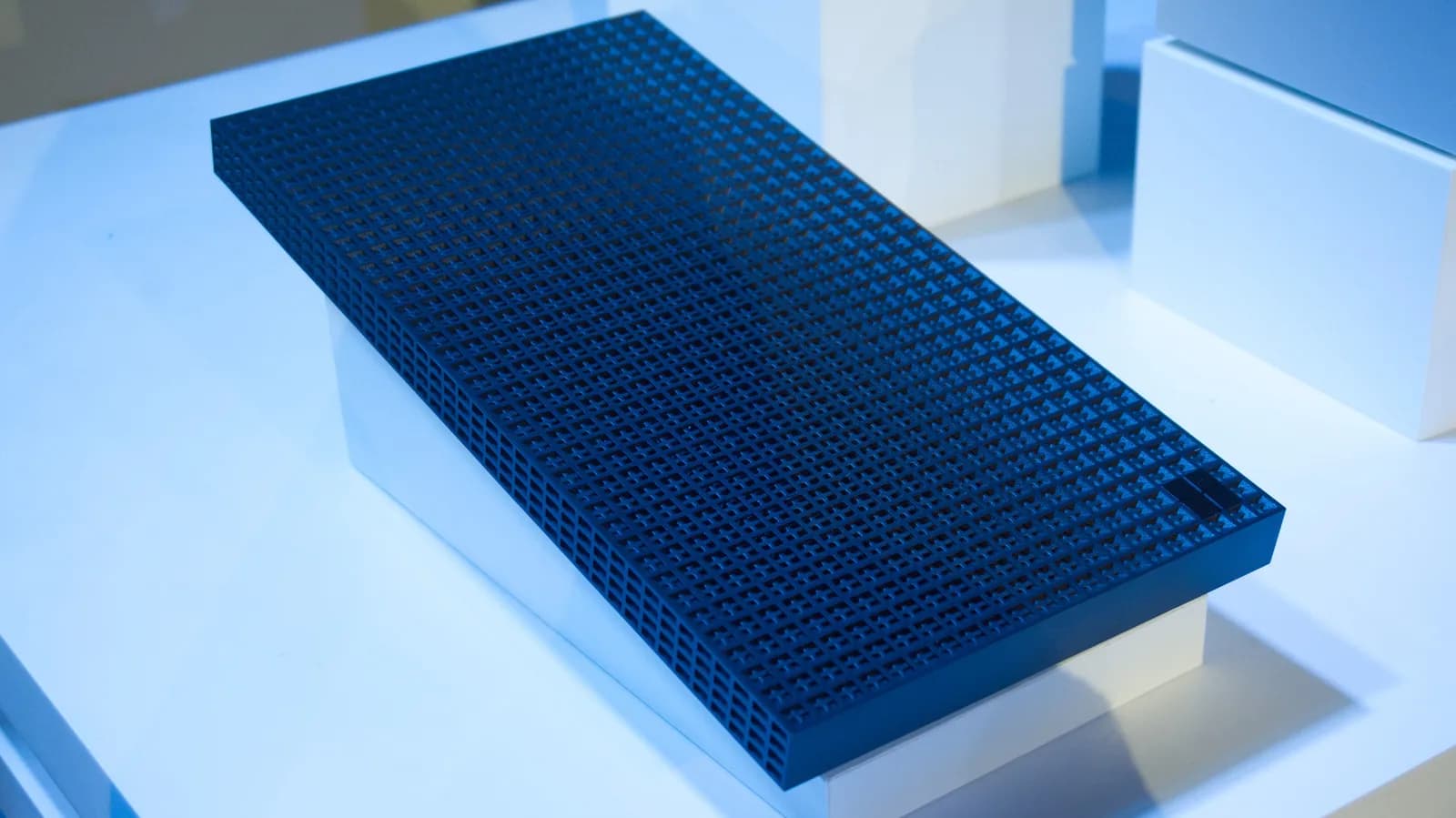
When hardware leaks or official reveals showcase a device that looks, as many have observed, like an oversized Lego brick, it immediately sparks curiosity about the engineering tradeoffs behind the industrial design. Packing desktop-class RTX graphics silicon, advanced cooling solutions, high-speed memory channels, and robust power supplies into a compact footprint requires clever thermal management and structural compartmentalization. Unlike traditional desktop towers that rely on vertical space and large airflow channels, specialized compact dev boxes must optimize every cubic millimeter of internal volume to prevent thermal throttling under sustained heavy loads.
The physical chassis of such specialized workstations is rarely arbitrary. Every vent, port placement, and internal bracket is engineered to maximize heat dissipation while maintaining structural integrity. For a machine expected to compile code, render assets, or crunch machine learning weights at full tilt for hours on end, thermal headroom is everything. The block-like appearance is a direct byproduct of prioritizing functional density and efficient airflow over conventional desktop aesthetics, catering to engineers who value raw computational stamina above sleek desk ornaments.
Hardware Specifications and the AI Developer Stack
At a price point hovering around $6,000, the Surface RTX Spark Dev Box naturally commands expectations of top-tier hardware specifications. While exact configurations vary across specialized engineering setups, devices in this class typically center around enterprise-grade multi-core processors paired with high-end NVIDIA RTX graphics cards. This combination provides the CUDA cores, Tensor cores, and dedicated VRAM capacity essential for running and fine-tuning modern large language models, computer vision networks, and complex graphics pipelines locally without hitting cloud latency or egress bottlenecks.
Beyond raw GPU muscle, these developer boxes emphasize balanced system architecture, incorporating generous amounts of high-speed RAM and ultra-fast NVMe storage arrays. When working with large datasets or massive containerized environments, I/O bottlenecks can severely cripple an expensive GPU. Ensuring that data flows seamlessly from storage to system memory and finally into the GPU's VRAM is a critical design challenge that high-end developer hardware must solve to deliver on its performance promises.
Why Specialized Dev Hardware Matters Today
The decision by major tech ecosystems to release dedicated, high-end developer appliances highlights how drastically the software engineering landscape has changed. Developing AI-native applications requires a fundamentally different feedback loop than traditional web or desktop development. Waiting minutes or hours for a cloud instance to spin up, or dealing with network latency when testing local inference pipelines, introduces friction that drains engineering productivity. Local hardware removes these friction points, allowing developers to iterate rapidly on complex algorithms before pushing finalized workloads to production cloud clusters.
Furthermore, data privacy and security concerns increasingly drive the adoption of powerful local developer hardware. Enterprises dealing with proprietary codebases, sensitive customer data, or restricted regulatory environments often prohibit uploading uncompiled models or raw training sets to third-party cloud services. A high-powered local box allows engineering teams to maintain absolute control over their intellectual property and data pipelines while still leveraging state-of-the-art machine learning capabilities right at their workstations.
The Developer Experience and Real-World Ergonomics
While benchmarks and spec sheets dictate market appeal, the day-to-day developer experience ultimately determines whether a $6,000 machine is viewed as an indispensable productivity multiplier or an expensive paperweight. Ergonomics extend beyond the physical device to software ecosystem integration, driver stability, and out-of-the-box compatibility with popular operating systems, container runtimes, and IDEs. For Windows and cross-platform developers alike, having a unified hardware target optimized directly by the platform vendor ensures fewer compatibility headaches and smoother driver updates.
Acoustic performance is another vital yet frequently overlooked aspect of desktop developer hardware. When a machine is pushing its GPU and CPU to the maximum, fan noise can transform a workspace into a jet engine testing facility. Efficient thermal design not only preserves hardware longevity and sustained clock speeds but also maintains a tolerable acoustic environment for engineers working in close proximity to their machines all day long.
Looking Ahead: The Future of Specialized Workstations
As artificial intelligence continues to permeate every layer of software development, the demand for specialized, high-performance desktop hardware is unlikely to fade. While cloud computing remains the backbone of large-scale distributed training and heavy production inference, the edge and the developer desk are becoming crucial nodes in the modern AI development lifecycle. Devices like the Surface RTX Spark Dev Box point toward a future where powerful local compute is seamlessly integrated with cloud workflows, giving engineers the best of both worlds.
Ultimately, high-end developer boxes serve as testbeds for where consumer and mainstream professional hardware might head in the next few years. Technologies pioneered in these expensive, niche workstations—such as advanced thermal management, high-density power delivery, and specialized neural processing integration—frequently trickle down into more accessible hardware tiers. For now, specialized dev boxes remain the weapon of choice for cutting-edge engineering teams pushing the boundaries of what is possible on a desktop.
Final Thoughts
Investing in a $6,000 developer workstation is a significant commitment for any engineering team, but it reflects the massive demands of modern software development in the AI era. By packaging heavy-duty compute into a compact, purpose-built chassis, Microsoft and similar hardware makers are acknowledging that the future of coding requires more than just a standard laptop. For developers tackling local model training, complex simulations, and heavy multi-threaded workloads, having uncompromising power directly under the desk is becoming less of a luxury and more of an absolute necessity.
Source: engadget.com