
Local Frontier AI on Apple Silicon: Inside the M5 Ultra Mac Studio Potential

The Local AI Shift in Modern Software Engineering
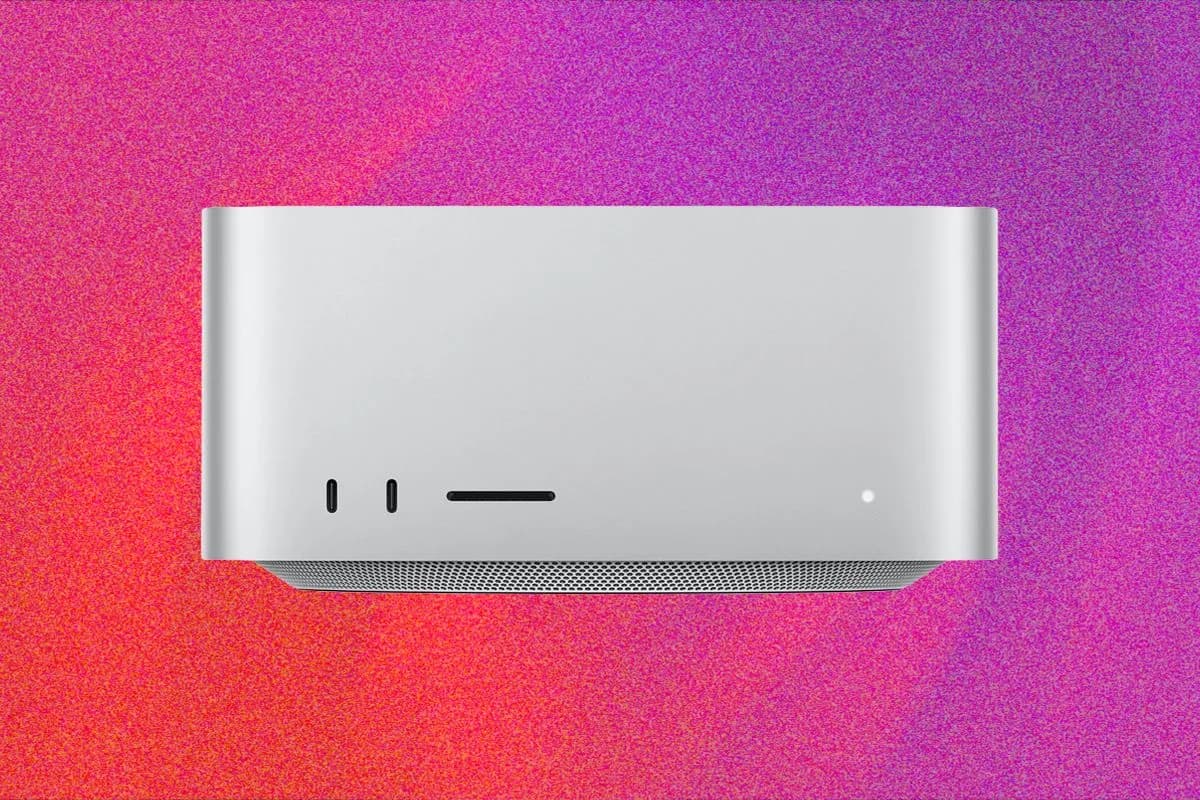
For the past few years, artificial intelligence development and inference have been inextricably linked to the cloud. Training massive frontier models and even executing inference on state-of-the-art architectures typically demanded sprawling server clusters packed with expensive, enterprise-grade accelerators. However, the hardware landscape is undergoing a quiet, profound transformation. With the latest iterations of Apple Silicon, specifically the anticipated M5 Ultra chip housed within the Mac Studio form factor, developers are discovering a powerful new paradigm: running frontier-level language models locally, right on the desktop.
This shift is not merely about convenience or cutting down cloud API costs. It represents a fundamental change in how software engineers approach privacy, latency, and system architecture. When a machine can host and execute complex neural networks natively, the barriers to experimentation drop dramatically. Engineers no longer need to provision external resources or worry about data compliance hurdles when feeding proprietary codebases into an intelligent assistant. The local workstation is evolving into a self-contained AI powerhouse.
Understanding the M5 Ultra Hardware Architecture
At the heart of this local compute revolution is a relentless focus on memory bandwidth and unified architecture. Traditional desktop systems separate system RAM from dedicated graphics VRAM, creating a notorious bottleneck when moving massive model weights back and forth. Apple's unified memory architecture fundamentally eliminates this friction by allowing the CPU, GPU, and dedicated Neural Engine to share a massive, ultra-high-speed memory pool. This design choice is the single most critical factor enabling oversized language models to fit comfortably into local hardware.
While exact specifications scale with high-end configurations, the architectural philosophy remains consistent: massive amounts of high-bandwidth memory paired with heterogeneous compute units optimized for matrix multiplication. For developers, this means the Mac Studio can hold quantized or even native-precision models that would traditionally choke standard consumer hardware. The synergy between Apple's hardware engineering and optimized software frameworks—such as Metal-accelerated runtimes—ensures that tokens per second remain viable for actual interactive development rather than agonizingly slow batch processing.
Empowering Local Frontier-Level Models
Running a small, distilled model locally is one thing, but the real breakthrough lies in executing true frontier-class models on local iron. As open-weights models continue to rival proprietary cloud alternatives in capability, having a local machine capable of digesting these parameters changes the calculus of software creation. Developers can now fine-tune, test, and run complex reasoning loops offline, completely disconnected from third-party telemetry or uptime dependencies.
This capability serves as an invaluable preview of the future of personal computing. As software systems become increasingly agentic, relying on background models to refactor code, generate tests, and orchestrate deployments, the demand for local compute will only accelerate. Having a machine that acts as a private, secure bastion for these frontier models ensures that intellectual property stays on the device while still reaping the benefits of state-of-the-art machine intelligence.
- Eliminates cloud API latency for real-time coding assistants.
- Keeps proprietary codebases and sensitive user data strictly private.
- Enables offline development environments for remote or secure settings.
Workflow Implications for Software Developers
For the everyday programmer, the arrival of ultra-powerful local AI hardware demands a rethink of toolchains. Integrated Development Environments are rapidly transforming into AI-native canvases where multi-modal models assist with everything from architectural planning to automated debugging. When these models run locally via hardware like the M5 Ultra Mac Studio, the response loop tightens to near-instantaneous speeds, making AI feel less like a remote service and more like a natural extension of the compiler.
Furthermore, local execution encourages experimentation. Developers can spin up specialized local models tailored to specific programming languages or proprietary internal frameworks without worrying about escalating subscription or token-based cloud bills. This lowers the financial and technical barrier to adopting advanced machine learning workflows, democratizing access to capabilities that were previously locked behind enterprise cloud gates.
Addressing the Bottlenecks: Heat, Power, and Cost
Despite the remarkable technical achievements of high-end Apple Silicon, local frontier AI is not without its challenges. Packing immense compute capability and massive memory pools into a compact desktop chassis generates significant thermal loads. While Apple's thermal architecture is famously efficient compared to traditional x86 workstation rigs, sustained, heavy inference workloads will push cooling systems to their limits, raising questions about longevity and sustained peak performance under continuous load.
Cost is another critical hurdle. Machines configured with the maximum unified memory required to host massive frontier models command a steep enterprise-tier price tag. While they are far cheaper than equivalent enterprise GPU clusters, they remain a significant capital expenditure for individual developers or small teams. Balancing the upfront hardware investment against ongoing cloud infrastructure costs requires careful financial calculation for engineering leadership.
The Broader Industry and Ecosystem Horizon
The implications of localized frontier AI extend far beyond individual developer desks, signaling a broader industry pivot toward edge intelligence. As silicon manufacturers race to build client devices capable of handling complex neural workloads, software ecosystems are rapidly adapting. Frameworks are being rewritten to maximize hardware-specific accelerators, and open-source communities are heavily investing in quantization techniques that squeeze massive models into smaller memory footprints without sacrificing intelligence.
This hardware milestone demonstrates that the future of AI will not exclusively live in massive, centralized data centers. Hybrid architectures—where routine, privacy-sensitive, or low-latency tasks run locally on devices like the Mac Studio, while massive training runs happen in the cloud—are becoming the new standard. It is a transitional phase that bridges the gap between traditional computing and the fully autonomous, AI-driven development environments of tomorrow.
Final Takeaway
The ability of machines like the upcoming Mac Studio to run frontier-level AI locally marks a definitive turning point for software engineering. By marrying unified memory architectures with optimized execution runtimes, high-end Apple Silicon proves that local workstations can serve as legitimate, private hubs for advanced machine intelligence. While cost and thermal considerations remain, this hardware preview highlights an inevitable trajectory: the future of development is local, private, and deeply intelligent.
Source: wired.com