
Meta Expands Ambient Hardware Ambitions by Inviting Developers to Build Their Own Muse Devices

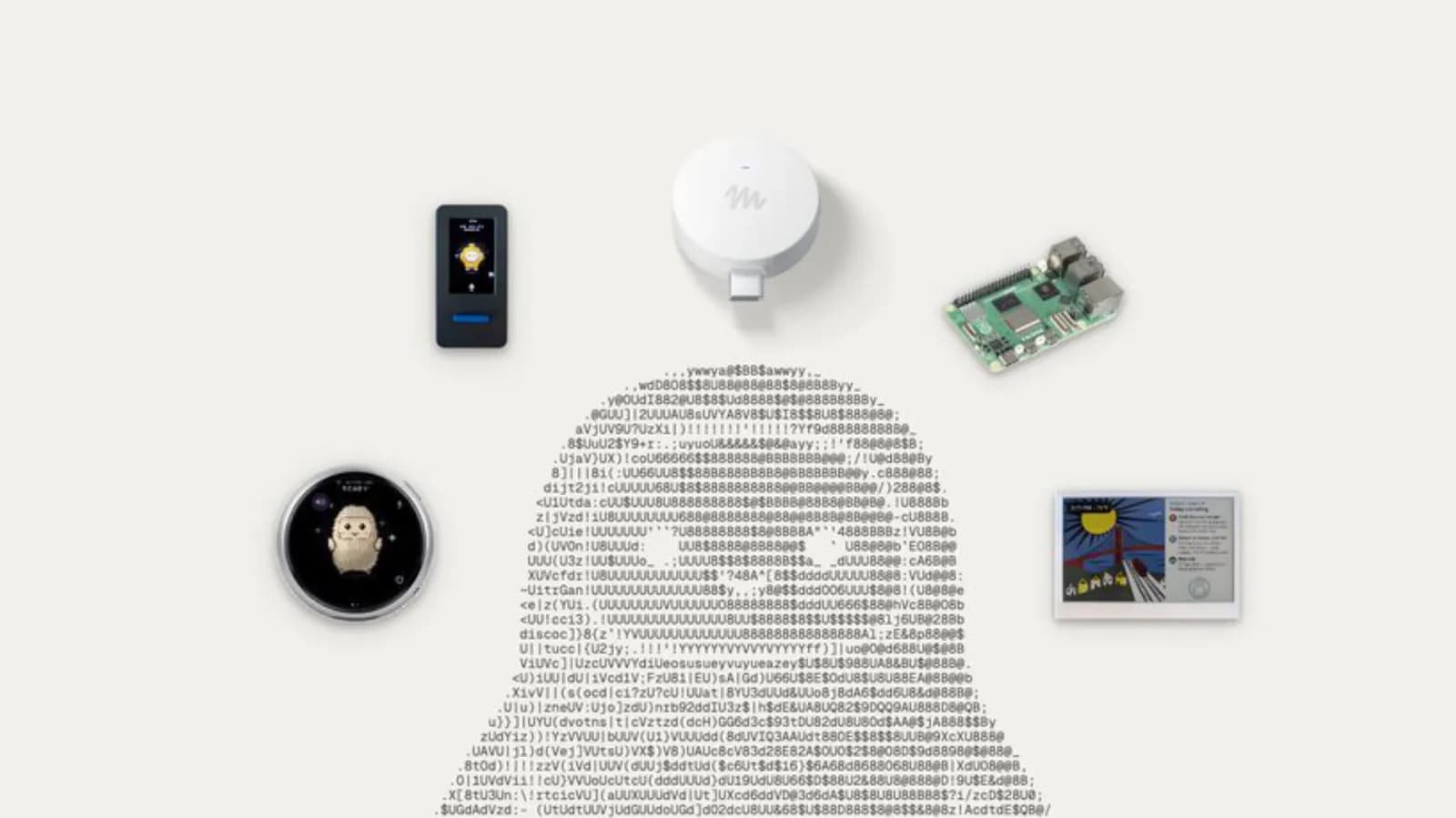
In the evolving landscape of consumer technology, the interface between software services and the physical environment is undergoing a fundamental transformation. For years, the predominant vector for ambient computing has been dominated by a handful of static smart speakers, wall-mounted displays, and connected plugs governed by walled gardens. However, Meta is signaling a notable departure in how smart connected devices might be conceptualized and deployed, spotlighting an initiative dubbed Muse. Alongside demonstrating internal hardware concepts like the Muse Home Link, the technology giant is encouraging external builders and tinkerers to fashion their own custom Muse-compatible gadgets.
This dual approach—fielding first-party hardware while simultaneously inviting external experimentation—suggests a recognition that ambient intelligent systems cannot rely entirely on rigid, off-the-shelf consumer products. By fostering an environment where hardware hackers, product engineers, and third-party developers can craft contextual hardware tailored to bespoke needs, Meta is seeking to capture a grassroots momentum reminiscent of the early days of personal computing and open-source microcontroller ecosystems.
The Evolution of Meta’s Ambient Hardware Strategy
Meta’s relationship with hardware has historically oscillated between ambitious, mass-market consumer headsets and experimental peripheral devices. The company achieved substantial footprint through its Quest virtual reality line and discovered surprise commercial traction with smart audio-visual eyewear developed in partnership with Ray-Ban. Conversely, its earlier foray into dedicated domestic screens—the Portal series—faced headwinds as consumer tastes shifted away from stationary video-calling appliances toward multipurpose portable computing.
The emergence of modern generative AI models and localized contextual agents has renewed interest in dedicated domestic hardware. Rather than relying on a screen that demands direct visual engagement, next-generation smart home gadgets prioritize ambient awareness: listening for subtle contextual cues, interacting through natural speech, and acting as distributed bridges to home automation protocols. The Muse initiative fits directly into this revised philosophy, aiming to integrate intelligence into everyday physical spaces without demanding constant screen time.
Inside the Muse Concept and the Muse Home Link
At the center of Meta’s current exploration is the Muse Home Link, an internal blueprint designed to act as an anchor point within living spaces. While full technical teardowns remain limited, the core premise positions the device as a centralized nervous system for ambient interactions, linking decentralized nodes, sensors, and peripherals to broader intelligence backends. Rather than attempting to serve every single household niche with an armada of proprietary accessories, the Home Link provides the foundational connectivity and processing scaffold.
What distinguishes this development is the explicit emphasis on empowering creators to build their own hardware variations. Meta’s choice to advocate for custom-built Muse gadgets indicates a deliberate pivot toward modularity. Instead of forcing users into an all-or-nothing ecosystem, the initiative suggests a platform where specialized sensors, custom enclosures, and targeted functional modules can interface seamlessly with a unified intelligence layer.
Why Custom Hardware Matters in an Era of Monoliths
For decades, major tech platforms have sought absolute vertical integration. From smartphone ecosystems to proprietary home automation protocols, hardware vendors frequently lock down interfaces, require expensive certification programs, and tightly police the peripheral supply chain. While this ensures polish and baseline security, it invariably suffocates niche innovation. Enthusiasts who wish to automate specific home workshops, design tactile input interfaces for accessibility, or deploy hyper-localized environmental monitors are often left out in the cold.
By championing user-built gadgets within the Muse orbit, Meta is testing a hybrid model. If independent developers and hardware startups can spin up rapid prototypes using accessible microcontrollers and modular sensors—while relying on Meta’s underlying communication framework and AI infrastructure—the friction associated with physical product deployment drops precipitously. This enables rapid community-driven iteration, allowing unconventional and highly functional form factors to surface without requiring millions of dollars in tooling and manufacturing upfront.
Implications for the Developer and Maker Communities
For embedded systems engineers, software developers, and product designers, the prospect of an open-ended hardware playground backed by a major technology vendor opens intriguing avenues. Modern software development has largely divorced itself from the physical constraints of circuitry, relying instead on cloud abstraction layers. However, the renaissance of edge computing and spatial intelligence requires engineers to once again consider latency, sensor fidelity, power budgets, and physical ergonomics.
- Rapid Prototyping: Builders can leverage off-the-shelf maker components—such as ESP32 boards, MEMS microphones, and tactile encoders—to assemble functioning nodes that interface with larger software platforms.
- Custom Input Paradigms: Developers can invent tangible user interfaces (TUIs), such as dials, physical tokens, and spatial switches, replacing sterile glass touchscreens with expressive, tactile domestic controls.
- Decentralized Context Gathering: Instead of relying on a single omnidirectional microphone in the living room, multiple low-power Muse devices could distribute contextual audio and telemetry evenly across diverse physical rooms.
Moreover, this initiative presents an opportunity for indie hardware developers to commercialize small-batch production runs. If the Muse standard provides sufficient interoperability, boutique hardware brands could emerge to serve passionate subcultures, from smart audio collectors to home laboratory hobbyists, all functioning within a shared technical paradigm.
Privacy, Governance, and Ecosystem Friction
Despite the technological appeal, encouraging a sprawling network of ambient domestic devices introduces significant hurdles that cannot be overlooked. Trust and privacy remain paramount in any conversation involving domestic technology, particularly when associated with Meta’s historically advertising-centric data infrastructure. Placing always-listening, distributed hardware into the most private spaces of human life requires absolute transparency regarding telemetry collection, model inference, and local-versus-cloud data partitioning.
Furthermore, supporting open and custom hardware introduces immense security vulnerabilities. If arbitrary microcontroller code can hook into a home’s primary communication link, bad actors could exploit unpatched firmware to intercept local traffic or compromise the broader home network. Establishing strict sandboxing, secure cryptographic handshakes, and verifiable boot mechanisms will be essential if Meta hopes to prevent the Muse framework from becoming an entry vector for malicious exploits.
The Long View: Moving Beyond the Smartphone Glass
Ultimately, Meta’s Muse initiative and the Muse Home Link reflect a broader philosophical transition sweeping through the technology sector. The smartphone has reached architectural maturity; subsequent increments in processing speeds and display brightness yield diminishing experiential returns. The next frontier of user experience lies in ambient computing—systems that operate unobtrusively in the periphery, emerging only when summoned and blending harmoniously into the physical environment.
By democratizing the creation of the hardware nodes that populate this environment, Meta is hedging its bets. Rather than presuming to know exactly what the ultimate domestic AI appliance looks like, the company is placing foundational tools into the hands of the global maker community. Whether Muse matures into a widely embraced open standard or remains an influential design experiment, it highlights a crucial realization: the future of intelligent hardware will not be dictated by a single black glass rectangle, but by a constellation of creative, tailored, and tactile physical forms.
Source: engadget.com