
OpenAI Brings Virtual Try-On to ChatGPT: A New Frontier for Generative Retail AI

Introduction to Generative Apparel Integration
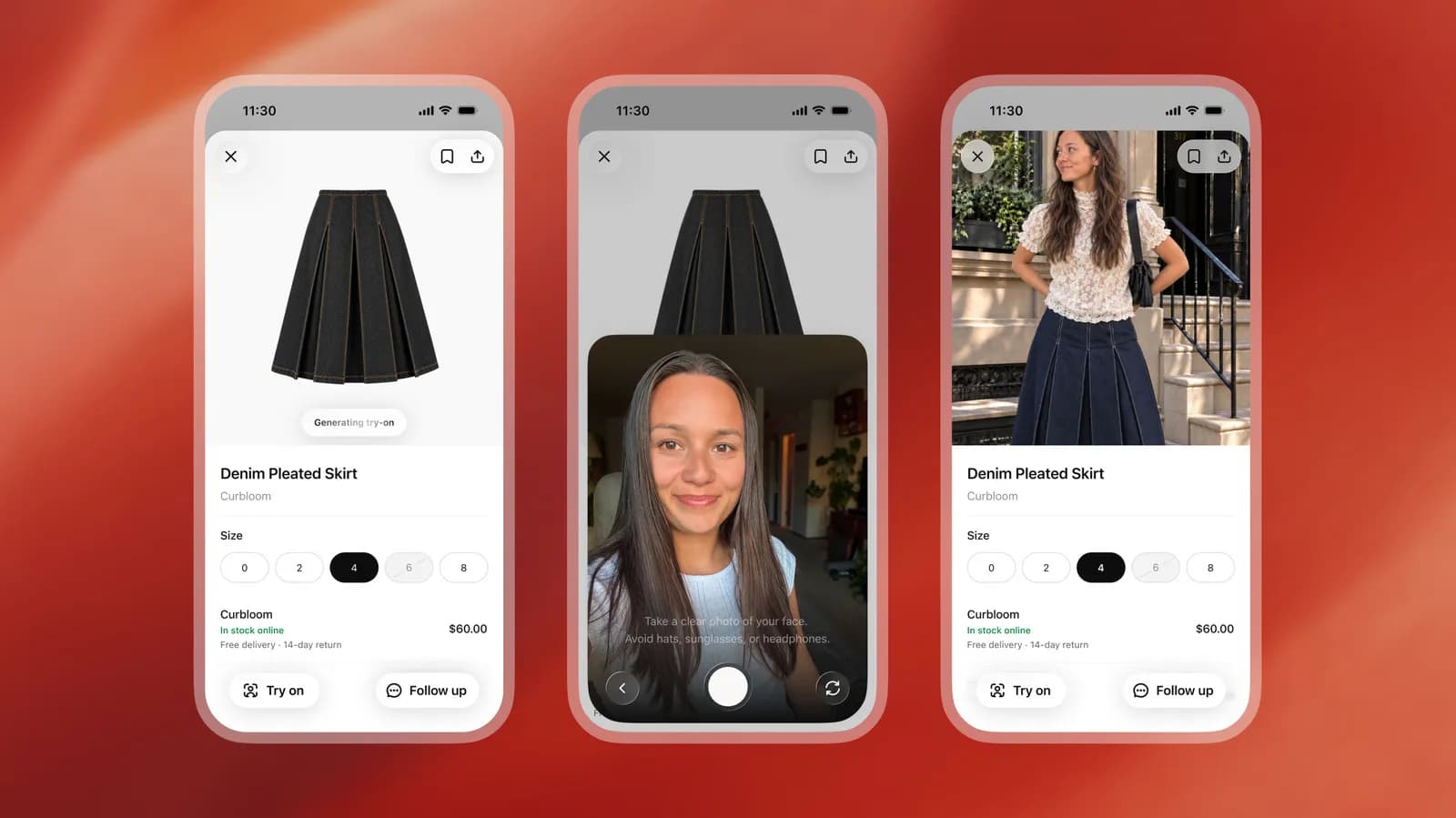
The boundary between conversational artificial intelligence and consumer retail continues to dissolve at a rapid pace. With the integration of virtual try-on capabilities into ChatGPT, OpenAI is pushing its multimodal models beyond traditional text and image analysis into the realm of interactive fashion retail. Users can now leverage the platform's advanced image generation pipelines to see how various garments fit onto uploaded photos, fundamentally shifting how consumers interact with fashion online.
This development marks a significant evolution in how foundational machine learning models are deployed for practical, everyday consumer applications. Rather than relying on specialized, single-purpose apps built by individual retailers, consumers can utilize a general-purpose AI assistant to bridge the gap between browsing a wardrobe and visualizing the final look. For developers and UI/UX designers alike, this rollout signals a new paradigm in multimodal workflow design, where complex spatial and aesthetic tasks are handled natively within a conversational interface.
The Underlying Mechanics of Visual Realism
At the core of this feature is OpenAI's state-of-the-art image generation technology, which has grown increasingly sophisticated in handling complex spatial transformations. Transforming a flat-lay photograph of a garment or a product listing image and accurately draping it over a user's unique body shape requires more than simple image overlay. The model must comprehend anatomy, fabric physics, lighting conditions, and perspective to render a convincing, high-fidelity result.
Achieving this level of consistency relies heavily on advances in diffusion models and latent space manipulation. The system needs to preserve the identity of the user while accurately transferring the texture, pattern, and cut of the clothing item. By leveraging multimodal capabilities, ChatGPT can parse descriptive context alongside visual assets, ensuring that the generated output aligns with both the user's specific preferences and the actual physical characteristics of the apparel.
Bridging Chat Interfaces and E-Commerce Ecosystems
The introduction of virtual try-on within a conversational agent transforms ChatGPT into an active shopping assistant rather than a passive informational tool. Historically, online apparel shopping has been plagued by high return rates, largely driven by the uncertainty of how clothes will look or fit in reality. By allowing users to curate, save, and visualize items directly inside a chat session, the platform creates a more cohesive digital shopping funnel.
This integration opens up fascinating architectural possibilities for third-party e-commerce platforms. As developers begin to explore ways to connect their storefront APIs with conversational AI agents, the potential for seamless, agent-driven commerce expands. Instead of navigating cluttered web interfaces, users can converse with an AI stylist, test multiple outfits through rapid generation cycles, and seamlessly transition from discovery to purchase.
Furthermore, the ability to save preferred clothing items for future sessions introduces a persistent state layer to the shopping experience. This moves the interaction model away from ephemeral chat queries toward a personalized digital closet, where the AI retains context about user preferences, sizing, and aesthetic choices across multiple interactions.
Technical and Ethical Challenges in Visual Generation
Despite the impressive technological leap, deploying virtual try-on at scale introduces a host of engineering and ethical hurdles. On the technical side, maintaining low latency while rendering high-resolution, physically plausible images remains a formidable computational challenge. Generative models are notoriously resource-intensive, and scaling these capabilities to millions of active users requires significant infrastructure optimization, efficient caching strategies, and robust fallback mechanisms.
On the ethical and privacy front, handling user-submitted photos—especially those depicting full-body images—demands rigorous data governance. Ensuring user trust requires transparent data handling policies, secure transmission pipelines, and explicit user consent regarding how biometric and personal imagery is processed and stored. Additionally, developers must constantly monitor and mitigate biases in generative outputs, ensuring that the model accurately and respectfully represents diverse body types, skin tones, and physical attributes without distortion.
Developer and Industry Implications
For the broader software development community, this feature release highlights the growing importance of multimodal APIs. As foundational model providers expand their feature sets, developers are increasingly tasked with building client applications that can seamlessly orchestrate text, structured data, and high-fidelity media. This shifts the engineering focus from building bespoke computer vision pipelines to effectively integrating and orchestrating pre-trained, highly capable third-party services.
Retail tech startups and enterprise e-commerce platforms will need to evaluate how these conversational capabilities impact their existing product roadmaps. Rather than competing with general-purpose AI assistants on core generation technology, specialized players may find success by building deep integrations, proprietary inventory management plugins, and hyper-targeted recommendation engines that plug directly into conversational interfaces.
Looking Ahead: The Next Era of Interactive Retail
The arrival of virtual try-on inside ChatGPT represents a milestone in the commercialization of generative AI. It demonstrates that large models are fully capable of tackling domain-specific visual challenges that were once thought to require dedicated, single-purpose computer vision applications. As these models become faster, more accurate, and deeply integrated with external databases, the line between software assistants and digital personal shoppers will continue to blur.
For developers, product managers, and retail strategists, this trend underscores the necessity of designing for multimodal experiences. The future of software interaction is increasingly conversational, visual, and deeply contextual. Adapting to this paradigm shift will require rethinking traditional user flows and embracing the vast potential of generative AI to solve real-world consumer problems.
Source: engadget.com