
Robotic Exoskeletons Enter a New Era of Practical Deployment

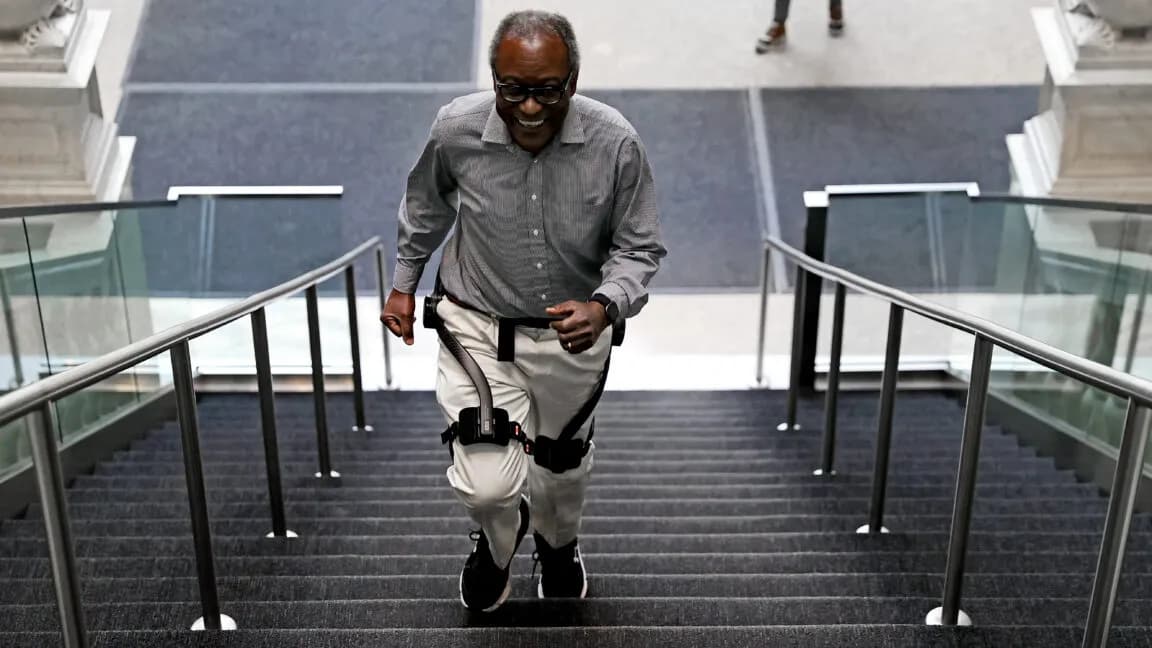
Introduction to the Exoskeleton Revolution
For decades, the concept of the robotic exoskeleton remained firmly planted in the realm of science fiction, depicted as powered suits that could grant superhuman strength or allow paralyzed individuals to leap across obstacles. Today, that cinematic fantasy is steadily transforming into a gritty, pragmatic reality. Recent real-world deployments and user studies indicate that wearable robotics are crossing a vital threshold, shifting from experimental laboratory curiosities to genuinely useful tools that deliver measurable physical benefits in everyday environments.
As these systems become lighter, more energy-efficient, and far more adaptable, engineers and human-factors researchers are unlocking new ways to augment human capability. Whether designed to mitigate chronic back strain on a warehouse floor or to assist rehabilitation clinics in helping patients walk again, the modern exoskeleton ecosystem is maturing. This evolution marks a significant milestone in human-computer interaction, where software, sensors, and mechanical actuators converge directly onto the human body.
The Technological Leap in Materials and Actuation
The recent progress in exoskeleton viability is largely driven by advances in underlying hardware components rather than any single breakthrough. Historically, developers struggled with a triad of conflicting constraints: heavy batteries, rigid mechanical frames that restricted natural movement, and sluggish control loops that failed to synchronize smoothly with human reflexes. Modern iterations have largely overcome these hurdles through the integration of carbon-fiber composites, high-torque micro-motors, and sophisticated edge-computing processors.
Furthermore, contemporary systems increasingly rely on unpowered or passive designs alongside active, motorized units. Passive exoskeletons use clever arrangements of springs, dampers, and elastic bands to store and release kinetic energy during repetitive motions like lifting or reaching overhead. This drastically reduces the metabolic cost of physical labor without requiring heavy lithium-ion battery packs or complex electrical wiring, lowering the barrier to entry for widespread industrial adoption.
Software Control Systems and Intent Detection
Beneath the mechanical shell of any modern exoskeleton lies a complex software stack responsible for predicting and interpreting human intent. Translating neural signals or subtle biomechanical shifts into fluid mechanical assistance requires high-frequency sensor fusion. Accelerometers, gyroscopes, and electromyography (EMG) sensors continuously stream data about muscle tension and limb trajectory into localized microcontrollers running specialized machine learning models.
These algorithms learn the unique movement patterns of individual wearers over time, adapting the timing and level of mechanical support to match changing workloads. For software engineers working in this space, the challenge is intensely interdisciplinary. It demands an intimate understanding of low-level firmware optimization, real-time operating systems (RTOS), and adaptive control theory to ensure the machinery responds intuitively within milliseconds.
Real-World Impact on Industrial and Medical Sectors
The most tangible benefits of current exoskeleton deployments are manifesting in high-demand physical environments, notably logistics, manufacturing, and healthcare. In distribution centers where workers routinely handle heavy cargo, industrial suits help distribute loads away from vulnerable lumbar regions, sharply reducing the incidence of debilitating musculoskeletal disorders and chronic fatigue. By safeguarding human workers against repetitive strain injuries, companies are seeing improvements in both workforce retention and operational productivity.
In the medical and therapeutic domain, motorized lower-limb exoskeletons are redefining rehabilitation protocols. Physical therapists utilize these wearable platforms to guide patients through repetitive gait training with a precision that manual assistance simply cannot match. This sustained, high-repetition practice stimulates neuroplasticity, accelerating recovery pathways for individuals recovering from strokes, spinal cord injuries, or severe neuromuscular conditions.
Overcoming Ergonomic and Adoption Hurdles
Despite these undeniable triumphs, the widespread integration of exoskeletons faces notable friction points. Comfort remains a persistent battleground; a device that feels acceptable for twenty minutes can induce chafing, pressure points, or unnatural joint alignment after an eight-hour shift. Engineers must continuously refine human-machine interfaces to accommodate diverse body types, varying heights, and different physiological geometries without sacrificing structural integrity.
Cost and maintenance represent additional barriers. Enterprise-grade active exoskeletons require significant capital investment, alongside specialized technical staff capable of diagnosing hardware failures, calibrating software parameters, and performing routine maintenance. Until economies of scale bring these expenses down, widespread consumer adoption or small-business integration will likely remain out of reach, confining deployment primarily to well-funded logistics enterprises and specialized medical clinics.
The Developer and Engineering Perspective
For technologists and systems architects, the rise of wearable robotics opens up an exciting new frontier. Developing for the human body introduces unique constraints that differ radically from traditional cloud or mobile development; code errors or latency spikes no longer just cause a dropped frame or a server timeout—they directly impact a person's balance and physical safety. This reality demands rigorous safety-critical engineering practices, fault-tolerant software design, and comprehensive simulation testing.
As developer tools, open-source biomechanical datasets, and modular hardware kits become more accessible, the barrier to entry for software engineers interested in robotics is steadily dropping. Integrating machine learning frameworks with real-time sensor streams allows developers to build smarter assistance algorithms that continually adapt to unpredictable physical environments.
Looking Ahead to the Next Generation
The dawn of the exoskeleton age signals a profound shift in how we think about human augmentation. Rather than replacing human workers with autonomous robots, this technology aims to empower the human element, combining biological intuition with mechanical resilience. As battery chemistries improve, actuators become more efficient, and machine learning models grow more context-aware, exoskeletons will likely become as commonplace in demanding physical professions as personal protective equipment is today.
Source: arstechnica.com