
The Irony of Embodied AI: Why Training Your Replacement Is a Tough Sell for Tesla Workers

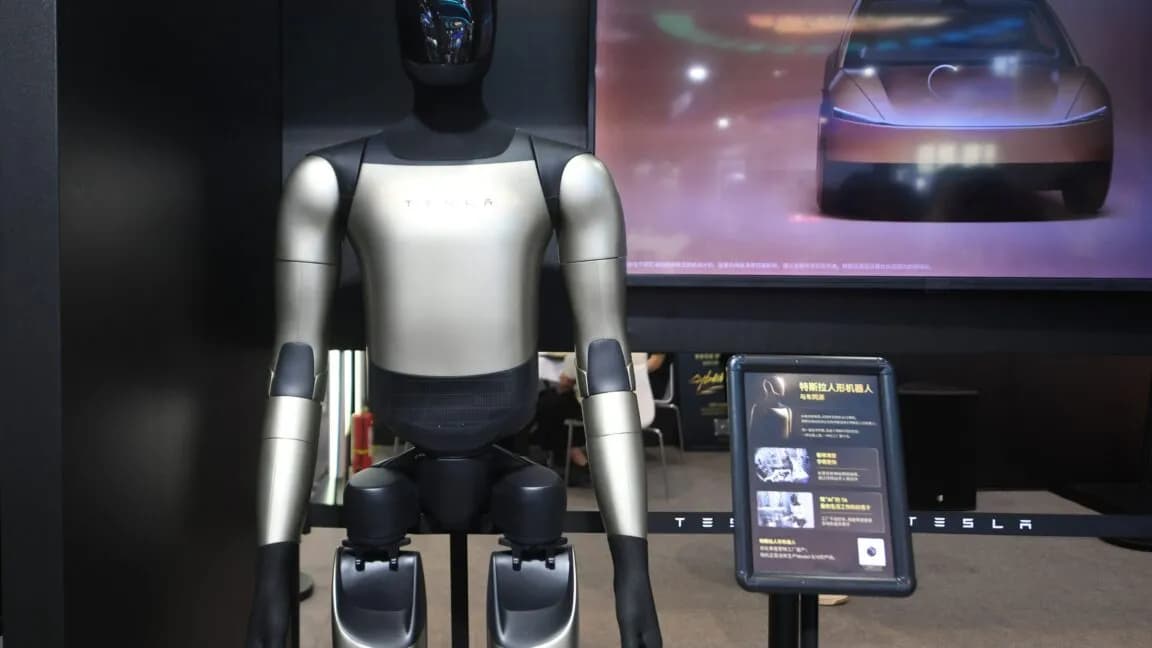
The Human Element in the Age of Embodied AI
The race to commercialize humanoid robots is often framed as a purely technical challenge—a complex intersection of actuators, computer vision, neural networks, and reinforcement learning. Yet, beneath the glittering promises of automated factories and universal labor replacement lies a deeply human friction point. Recent reports indicate that workers tasked with helping train Tesla’s Optimus humanoid robots are experiencing significant pushback against data collection efforts that explicitly aim to render their own jobs obsolete. This dilemma exposes a profound irony at the heart of modern artificial intelligence development: the systems designed to eliminate human labor are entirely dependent on human labor to learn how to do it.
For software engineers, robotics researchers, and machine learning practitioners, gathering high-quality training data is the ultimate bottleneck. While large language models feast on the vast, unstructured expanse of the internet, physical AI requires dense, multimodal sensory data captured from the real world. In the case of Optimus, human operators are frequently asked to wear motion-capture suits, perform repetitive manufacturing tasks, or teleoperate the hardware so the neural networks can imitate human dexterity. When workers realize that every successful demonstration brings forward the day they might be replaced, the motivation to optimize that data pipeline naturally begins to fracture.
The Technical Reality of Training Humanoid Hardware
To understand why this friction exists, we must look at the immense technical hurdles of general-purpose robotics. Unlike industrial robot arms bolted to a static chassis, which are programmed for deterministic, highly specific welding or assembly routines, a humanoid robot must navigate unstructured environments. It needs to handle variations in lighting, grip objects of varying textures and weights, and dynamically correct its balance in real-time. This level of adaptability cannot be hard-coded; it requires end-to-end imitation learning and massive transformer-based architectures trained on petabytes of physical interaction data.
Tesla’s approach heavily leverages its expertise in autonomous driving, adapting its vision-only neural networks and occupancy networks from vehicles into a bipedal form factor. However, driving a car and folding a shirt or sorting components on a factory floor involve vastly different degrees of freedom and tactile feedback. The data required to teach a machine how to manipulate physical objects delicately is notoriously scarce. Consequently, companies racing toward commercial milestones rely heavily on internal data-harvesting programs, transforming their own production floors into living laboratories where human employees become the primary teachers of their robotic successors.
Labor Dynamics and the Paradox of Self-Automation
The reluctance of workers to enthusiastically train their mechanical replacements highlights an escalating tension in the tech industry: the socio-economic contract of automation. Historically, industrial machinery replaced muscle, freeing humans to focus on cognitive tasks. The current wave of AI and humanoid robotics, however, targets cognitive and dexterous labor simultaneously. When employees are asked to actively participate in building the very tools designed to phase them out, it creates a unique psychological and organizational barrier that no software patch can easily resolve.
This dynamic introduces a new class of risk for companies pushing aggressive deployment timelines. If the workforce tasked with generating training data feels disenfranchised or alienated, the quality and diversity of the dataset will inevitably suffer. Machine learning models trained on reluctant, hastily executed, or intentionally noisy data will inherit those flaws. For engineering leadership, managing the human side of data collection is becoming just as critical as managing compute clusters or power budgets. Without alignment between labor and management, even the most advanced neural architecture risks stalling due to poor training inputs.
Why It Matters for the Broader Robotics Industry
Tesla’s ambitious targets—such as scaling production to thousands of units per week within the next couple of years—cannot be achieved in a vacuum. The broader humanoid robotics sector, including companies like Boston Dynamics, Figure, and Agility Robotics, is watching these developments closely. Every player in this space faces the same fundamental challenge: how to scale data collection safely, ethically, and efficiently without triggering severe labor backlash or regulatory scrutiny.
For developers and systems architects, this situation underscores the urgency of advancing unsupervised learning, simulation environments, and sim-to-real transfer techniques. If the industry remains perpetually reliant on manual human teleoperation and constant physical data capture, it will hit a scaling wall similar to the data exhaustion problems currently facing large language model creators. Investing in synthetic data generation, physics engines, and generalized foundation models that can learn from sparse cues will be essential if robotics is to scale beyond the limitations of human-dependent training pipelines.
Navigating the Path Forward: Ethics, Incentives, and Open Questions
As humanoid hardware transitions from research labs into commercial deployment, the industry must confront the structural questions surrounding labor displacement. Simply demanding that workers train their replacements without adequate economic buffers, retraining programs, or transparent governance is proving to be a recipe for internal friction. Technology companies will need to redefine how they incentivize data collection, perhaps by shifting the narrative from displacement to augmentation, or by ensuring that the economic upside of automation is shared more broadly with the workforce generating the foundational data.
Moreover, technical questions remain regarding safety and liability. When a humanoid robot operates autonomously in a shared space alongside human workers, the margin for error is razor-thin. If the training data was collected under conditions of duress, fatigue, or worker resentment, edge cases that lead to catastrophic failures or safety hazards increase exponentially. Ensuring robust validation loops that do not depend solely on compliance from a resistant workforce is a massive engineering hurdle yet to be fully solved.
Looking Ahead: The 2026 Horizon and Beyond
The push to put thousands of humanoid units into active service by the end of 2026 represents an aggressive timeline that forces rapid iteration across hardware and software alike. Yet, milestones are easily written on presentation slides and far harder to execute when confronted with real-world physical and human constraints. The resistance encountered by Tesla workers serves as a vital reality check for the entire tech ecosystem: artificial intelligence does not exist in a social vacuum.
Ultimately, the success of Optimus and similar platforms will depend as much on organizational psychology and labor relations as it will on transformer models and actuator efficiency. As developers push deeper into the era of physical AI, solving the human equation will prove to be just as challenging as mastering bipedal locomotion.
Source: arstechnica.com