
The Surprisingly Enduring Legacy of DVI in the Age of Modern Display Interfaces

Introduction
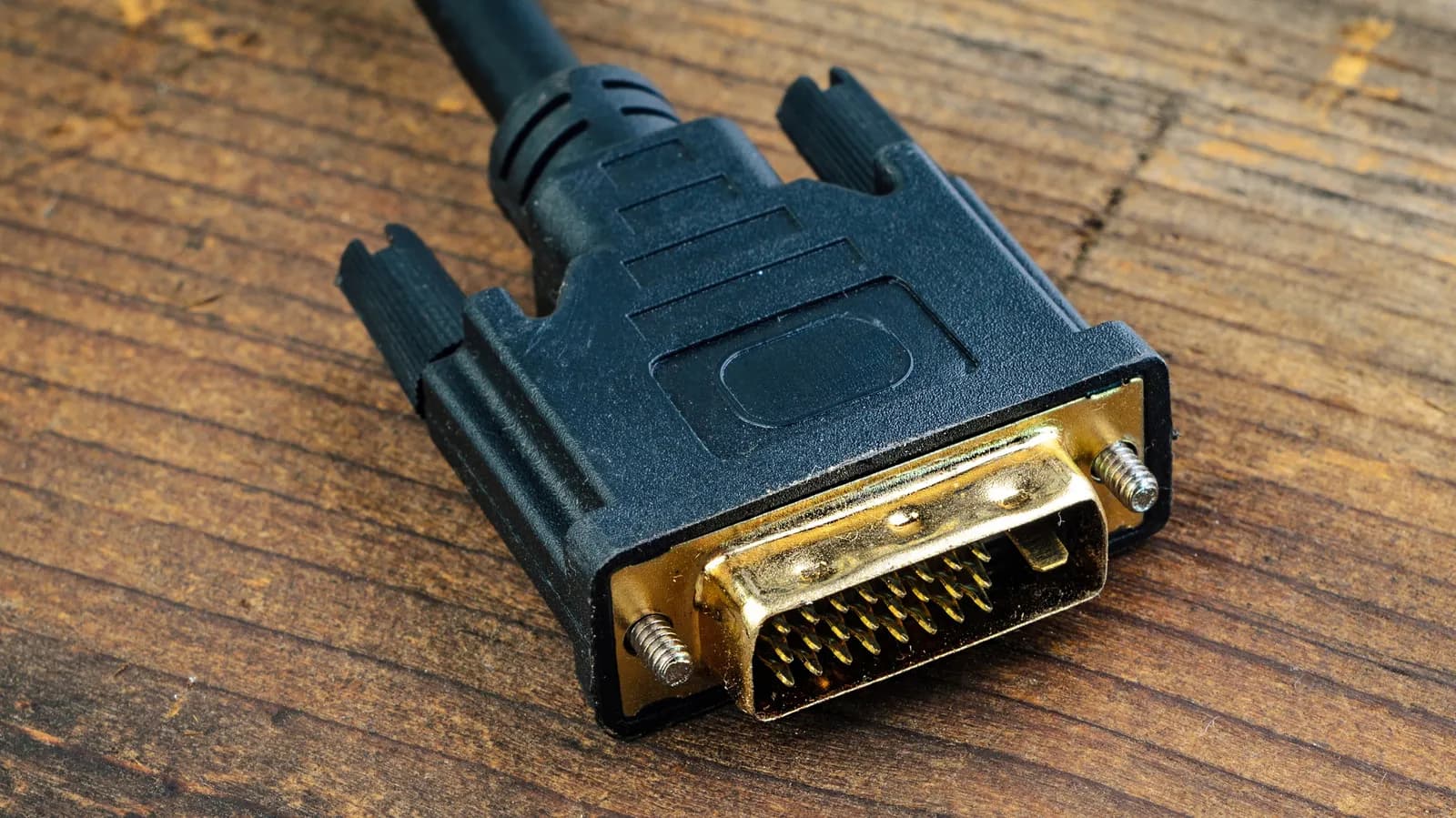
In the rapidly evolving landscape of consumer technology and enterprise computing, hardware standards have a notoriously short shelf life. Interfaces that were once considered cutting-edge innovations are swiftly relegated to historical footnotes as higher bandwidths, smaller form factors, and more versatile protocols take their place. Yet, amidst the graveyard of obsolete connectors, certain legacy standards stubbornly refuse to vanish entirely. The Digital Visual Interface (DVI), a staple of late-90s and 2000s video technology, remains surprisingly relevant today, largely thanks to the humble, ubiquitous DVI-to-HDMI adapter.
For developers, system builders, and IT professionals working with mixed-generation hardware, this backwards compatibility is more than a mere curiosity; it is a practical lifeline. While modern monitors and televisions boast streamlined HDMI and DisplayPort ports, countless legacy workstations, industrial control systems, and secondary displays still rely on DVI outputs. Understanding how this ancient signaling format bridges the gap to modern displays highlights both the clever engineering of digital transition periods and the inherent limitations of protocol conversion.
The Historical Context of DVI and Early Digital Video
Before DVI emerged at the turn of the millennium, desktop computing relied almost exclusively on analog VGA connections. While VGA served generations of CRT monitors admirably, the transition to flat-panel LCDs exposed its major flaw: converting a computer's digital framebuffer into an analog signal for transmission, only for the monitor to convert it back into a digital signal for rendering, introduced unnecessary noise, signal degradation, and calibration headaches.
Introduced by the Digital Display Working Group (DDWG), DVI was designed to eliminate this conversion loss by establishing a direct, uncompressed digital link between the host graphics card and the display. It quickly became the gold standard for high-end computing, powering everything from professional developer workstations to early enthusiast gaming setups. However, its bulky connector, lack of integrated audio, and rigid physical dimensions eventually sealed its fate, paving the way for the sleeker, multi-functional HDMI standard.
How DVI and HDMI Interoperate So Seamlessly
The primary reason DVI continues to find utility in modern workflows is a remarkable stroke of foresight by the creators of HDMI. When the High-Definition Multimedia Interface was drafted, its video signaling architecture was intentionally engineered to be backwards compatible with single-link DVI-D (Digital) signals. At a fundamental electrical level, the transition-minimized differential signaling (TMDS) used by both formats is largely identical for standard video resolutions.
This underlying protocol compatibility means that converting between DVI and HDMI does not require an active, power-hungry signal translation chip for basic resolutions. Instead, a simple passive adapter or cable with the appropriate physical pin configurations can route the digital data lanes directly from one connector type to the other. This plug-and-play simplicity makes bridging a DVI output to an HDMI display as cheap as it is straightforward, avoiding the complex hardware conversion layers required when crossing over to analog or entirely proprietary protocols.
The Real-World Limitations and Compromises
While the mechanical and electrical bridging between DVI and HDMI is remarkably robust, developers and power users should not expect a friction-free experience across all use cases. The most significant limitation of relying on these adapters is the complete absence of audio transmission. DVI was strictly a video-only standard; consequently, adapting a DVI source to an HDMI-equipped television or monitor will yield picture only, requiring a separate auxiliary cable for sound.
Furthermore, users must navigate the complexities of single-link versus dual-link DVI variants. While a basic adapter handles standard 1080p video effortlessly, pushing higher resolutions, such as 1440p or high-refresh-rate configurations common in modern developer setups, quickly exposes the bandwidth ceilings of single-link connections. Dual-link DVI cables carry double the data streams, but adapting them to modern high-resolution displays often requires expensive active signal converters rather than passive, pocket-spare adapters.
Developer and Enterprise Perspectives on Legacy Hardware
In professional development and enterprise environments, hardware longevity is often prioritized over bleeding-edge specs. Many software engineers, data analysts, and system administrators operate multi-monitor setups where secondary or tertiary displays consist of older, rock-solid panels that refuse to break down. Disposing of perfectly functional hardware simply because the connector standard shifted runs counter to sustainable IT practices.
Using DVI adapters allows teams to maximize their hardware investments, repurposing reliable older displays as auxiliary coding windows, terminal monitors, or diagnostic screens. It also provides a vital fallback when troubleshooting custom-built rigs, embedded systems, or legacy motherboards that lack modern display outputs, ensuring that engineers can always establish a visual pipeline without purchasing dedicated legacy test equipment.
The Ongoing Shift Toward Total Deprecation
Despite its current utility, the window for DVI's practical survival is rapidly closing. Modern graphics cards have completely stripped out DVI ports in favor of dense arrays of DisplayPort and HDMI outputs, meaning that future hardware will rely entirely on adapters just to communicate with any remaining DVI infrastructure. As native support disappears from consumer and enterprise silicon, sourcing cables and troubleshooting edge-case signal handshakes will become increasingly tedious.
Furthermore, as resolutions push past 4K into ultra-wide and high-refresh paradigms, the bandwidth disparity between modern interfaces and legacy digital standards becomes insurmountable. DVI served as an essential stepping stone into the all-digital era, but its architectural limits mean it can only remain relevant for so long in a world demanding ever-higher pixel densities and integrated data transmission.
Conclusion
The enduring presence of DVI via simple adapters is a testament to thoughtful interface design and the practical realities of hardware lifecycles. While it cannot compete with the bandwidth, audio capabilities, and versatility of modern HDMI and DisplayPort connections, it continues to serve as an inexpensive bridge for legacy systems and secondary displays. For developers and tech enthusiasts, keeping a DVI adapter in the toolkit remains a small, cost-effective insurance policy against the inevitable friction of technological evolution.
Source: engadget.com