
Putting LLMs in the Driver's Seat: A Real-World Autonomy Experiment

The Quest to Put Language Models Behind the Wheel
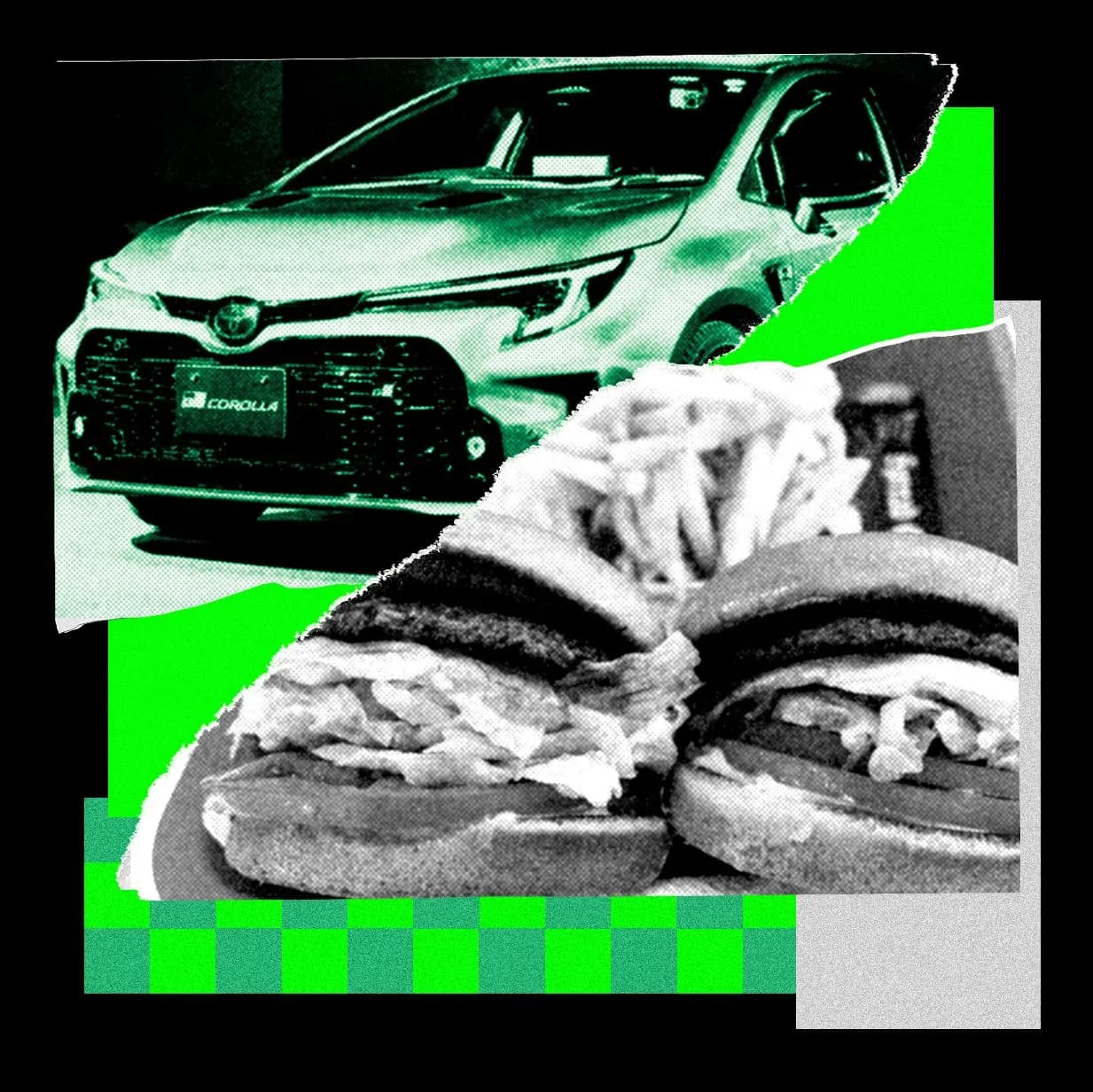
The boundary between simulated reasoning and physical-world interaction has long been a primary frontier in artificial intelligence research. While large language models have thoroughly demonstrated their prowess in writing code, composing prose, and answering complex trivia, moving these probabilistic systems out of the browser and into tangible hardware presents an entirely different class of engineering challenges. Recently, a team of bold researchers decided to push this envelope by tasking three prominent AI systems—GPT, Claude, and Grok—with a decidedly mundane yet physically demanding mission: operating a standard Toyota Corolla to acquire fast food from a local drive-thru.
This experiment cuts straight to the heart of contemporary debates surrounding embodied intelligence and robotics. Rather than relying on traditional, deterministic control systems or specialized autonomous driving stacks trained explicitly on millions of miles of telematics data, this approach tested whether general-purpose foundation models could interpret sensory input, translate high-level goals into low-level mechanical commands, and safely navigate complex real-world environments. The results offer a sobering look at the current capabilities and severe limitations of general-purpose language models when they are asked to interface directly with physical reality.
Bridging the Gap Between Tokens and Actuators
Connecting a cloud-based or locally run large language model to the physical controls of an automobile requires a sophisticated integration pipeline. The engineers had to build robust translation layers to convert camera feeds, sensor telemetry, and vehicle state into text or multi-modal prompts that the models could parse. Conversely, the output tokens generated by the AI needed to be rapidly sanitized, validated, and translated into steering angles, accelerator pressure, and braking commands sent directly to the vehicle's drive-by-wire system.
This paradigm contrasts sharply with end-to-end neural networks built specifically for autonomous navigation. While traditional self-driving models are optimized for latency, spatial awareness, and predictable trajectory generation, foundation models operate on next-token prediction trained over vast corpora of internet text and diverse multi-modal data. Asking an LLM to steer a vehicle is akin to asking a brilliant polymath who has only read about driving in books to suddenly take the wheel of a manual-shifting car in heavy traffic. The cognitive architecture is fundamentally mismatched for the task, making the engineering feat of merely connecting them all the more fascinating.
The Tale of Three Models: Success and Failure Modes
As the experiment unfolded in the real world, the divergence in performance among the three tested models was stark. While the developers kept the exact operational mechanics uniform across the trials, the underlying architectural nuances, safety alignments, and multi-modal processing capabilities of each model led to wildly different outcomes on the road.
Only one of the three systems successfully completed the objective of navigating the vehicle to the destination and acquiring the food without catastrophic failure. The other models encountered fatal bottlenecks ranging from semantic misinterpretations of visual cues to latency issues that rendered real-time steering corrections dangerously sluggish. In some instances, the models suffered from severe hallucinations, misidentifying static obstacles or failing to maintain basic lane discipline, forcing the human safety drivers to intervene immediately to prevent accidents. These failures underscore just how precarious it is to trust probabilistic text predictors with life-critical physical actuation.
Why This Experiment Matters for the Future of Robotics
For software engineers and machine learning practitioners, this quirky stunt offers valuable insights into the ongoing convergence of language models and robotics. We are witnessing a massive industry push toward 'embodied AI,' where foundational models act as the cognitive brain for physical agents like humanoids, delivery drones, and autonomous vehicles. The rationale is appealing: if an LLM can understand human intent, context, and complex multi-step instructions, it should theoretically be able to direct a robot to perform everyday chores.
However, this experiment demonstrates that semantic understanding does not automatically equate to spatial or physical competence. An LLM might brilliantly explain the rules of the road or write a Python script to simulate traffic flow, but translating that knowledge into millisecond-accurate braking decisions requires a level of temporal grounding that current autoregressive architectures fundamentally lack. It highlights the absolute necessity of hybrid systems—architectures that pair the high-level reasoning of foundation models with deterministic, low-level control loops designed to handle physics safely.
Furthermore, the safety implications cannot be overstated. When a software bug manifests as a crashed server or an incorrect code deployment, the cost is typically measured in downtime and debugging hours. When a model failure occurs in a moving vehicle, the consequences are measured in physical safety and liability. As developers continue to build tool-use and agentic frameworks that interact with the physical world, establishing rigorous safety envelopes around these systems becomes an urgent engineering priority.
Developer Takeaways and the Road Ahead
For developers building agentic workflows or experimenting with multi-modal AI, this study serves as both an inspiration and a cautionary tale. The temptation to treat foundation models as universal solvers is strong, especially as context windows expand and multi-modal capabilities improve. Yet, engineering reliable systems still requires respecting the boundaries of what these architectures were designed to do.
As the industry moves forward, we can expect to see more research into how to effectively ground language models in physical environments. This will likely involve advanced reinforcement learning from human and physical feedback, tighter integration with specialized perception networks, and the development of safety-first middleware that can override an LLM's erratic outputs in real-time. Until those foundational safety and latency hurdles are fully cleared, leaving the driving to specialized neural networks—and letting LLMs stick to the passenger seat—remains the wisest course of action.
Source: wired.com