
When Driverless Racing Hits the Wall: High-Speed Autonomy at the Limit

Pushing the Limits of High-Speed Autonomy
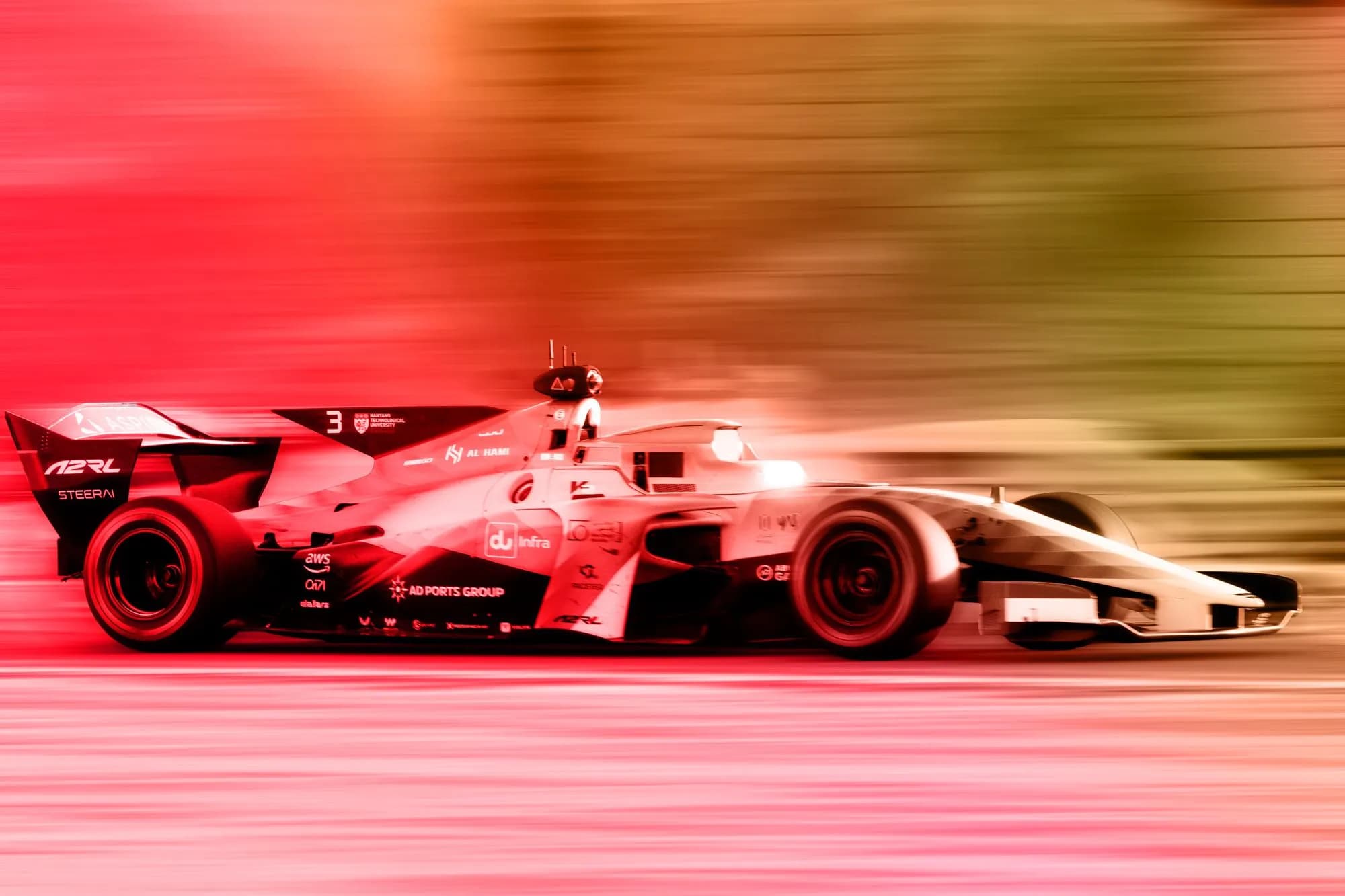
When autonomous systems are deployed in controlled urban environments, they rarely encounter the chaotic, high-velocity extremes that define competitive motorsport. Recent high-profile crashes involving autonomous race cars hurtling down iconic tracks at extreme speeds have thrust the raw limits of current robotic software into the spotlight. Rather than serving as a setback for the industry, these dramatic failures offer a masterclass in edge-case management, providing invaluable telemetry that cannot be gathered safely on public roads.
Motorsport has historically served as the ultimate proving ground for automotive engineering, from disc brakes and rearview mirrors to active aerodynamics. By transitioning autonomy into the racing arena, researchers and developers are attempting to compress decades of traditional driving evolution into a fraction of the time. When vehicles traveling at extreme velocities encounter blind corners, traction loss, and sensor degradation simultaneously, the underlying software architecture is forced to make split-second decisions under immense computational pressure.
The Anatomy of High-Speed Autonomous Failure
Operating a vehicle at upwards of 150 miles per hour leaves zero margin for latency or algorithmic hesitation. In traditional software engineering, a millisecond delay is imperceptible; in high-speed autonomous control loops, it can mean the difference between maintaining a racing line and a catastrophic collision with a barrier. Analyzing the telemetry from recent autonomous racing wrecks reveals that failure rarely stems from a single isolated bug, but rather from cascading cascades of unexpected sensor inputs and physics edge cases.
When multiple autonomous vehicles occupy the same physical space at terminal velocity, game theory and reactive planning algorithms collide with reality. Vision systems can be blinded by sudden glare, LiDAR units can experience dropouts due to particulate matter or vibration, and inertial measurement units can suffer from drift. If the fusion layer fails to resolve conflicting data streams instantly, the control system defaults to conservative or erratic behaviors that defy the laws of physics at that speed, resulting in spectacular structural failures.
Why the Track is the Ultimate Testing Ground
Public roads are inherently constrained by speed limits, traffic laws, and safety buffers that prevent developers from truly testing the absolute limits of their perception and planning stacks. Autonomous racing strips away these guardrails, creating a hyper-adversarial environment where algorithms must constantly operate near the absolute threshold of tire grip and vehicle dynamics. This is precisely why high-speed crashes on the track are considered a productive, albeit expensive, form of progress.
By intentionally pushing algorithms to the point of collapse, engineering teams can harvest rich datasets of near-misses and catastrophic failures that would take millennia to accumulate during routine street testing. The telemetry captured milliseconds before impact provides a goldmine of insights into how neural networks and rule-based planners prioritize conflicting objectives when a collision becomes statistically inevitable. These stress tests expose hidden vulnerabilities in sensor calibration and control loop latency that would otherwise remain dormant until triggered in a real-world scenario.
Implications for Everyday Driver Assistance Systems
It is tempting to view autonomous racing as a niche spectacle disconnected from consumer vehicles, but the foundational technologies being tested trickle directly down into Advanced Driver Assistance Systems (ADAS) and commercial robotaxis. The perception models, trajectory prediction algorithms, and sensor fusion pipelines developed to handle a vehicle at extreme racing speeds ultimately make lower-speed consumer systems more robust and predictable in emergency maneuvers.
When a consumer vehicle's automatic emergency braking system engages to prevent a highway collision, it relies on the same core principles of object detection and predictive pathing being refined on the track. The extreme edge cases encountered by racing software—such as sudden loss of traction on a wet surface or a blind corner obstruction—translate directly to unexpected pedestrian movements or debris on public highways. Mastering the physics of failure at high speeds ensures that everyday software can handle high-stakes anomalies with greater reliability.
The Developer Perspective: Bridging AI and Physics
For software engineers and machine learning practitioners, autonomous racing represents a fascinating paradigm shift from deterministic programming to probabilistic control under extreme constraints. Writing code for a robot that must calculate its next movement in microseconds while processing gigabytes of raw sensor data requires a deep fusion of computer science, robotics, and mechanical engineering. Developers must constantly balance the adaptability of deep learning models with the safety guarantees required of hard real-time operating systems.
This domain highlights the inherent limitations of treating machine learning as a black box. At high velocities, probabilistic guesses can lead to catastrophic hardware destruction, meaning developers must implement robust, deterministic safety envelopes that can override neural network outputs instantaneously. The lessons learned from trackside failures emphasize the ongoing necessity of rigorous verification, formal methods, and hardware-in-the-loop simulation before code ever touches physical silicon.
Looking Ahead: The Future of Autonomous Competitions
As autonomous racing leagues continue to evolve, the technology stack will undoubtedly mature to handle these high-velocity challenges with greater resilience. We are likely to see advancements in edge computing hardware, lower-latency sensor arrays, and more sophisticated predictive models that account not just for static geometry, but for the adversarial behavior of competing vehicles. Each crash serves as a harsh but necessary tuition payment toward a safer autonomous future.
Ultimately, the sight of driverless cars colliding at extreme speeds should not be interpreted as a failure of the technology, but as a testament to the sheer difficulty of the engineering problem being solved. By embracing failure in controlled, high-stress environments, the industry is building the foundational trust required for autonomy to scale safely into every aspect of transportation.
Source: wired.com